
Woman Working In Construction Shares How She's Fighting The 'Boys Club' Environment In The Blue-Collar Workforce
 Irene Miller | Shutterstock
There are still a lot of unfair stereotypes about women in the workforce, but it’s simply a fact that there are many more men than women working in blue-collar jobs. Seeing a woman working in a field like construction isn’t an everyday occurrence.
But, for Abbi Donovan, it’s just a regular day on the job. The 27-year-old transitioned into working in a painting and decorating union several years ago, and is determined to fight the inherent sexism in the industry and show other women that there’s a place for them there too.
Donovan admitted her job isn’t perfect, but she’s carved out a place for herself.
For those interested in her unique role as a woman in a blue-collar job, she regularly posts TikToks with behind-the-scenes looks at her work. In one video, she said she chose to pursue a job in construction because of how bad the job market had gotten, but she was surprised to find a good salary and excellent benefits.
Another video, posted in honor of Women in Apprenticeship Day, featured Donovan with some of her female co-workers. She said that the average hourly wage for a tradeswoman is significantly higher than it is in other professions, and that the job doesn’t require going into debt for a college degree.
In an interview with People, Donovan encouraged other women to get involved in trades if they want to. “They can excel here,” she insisted. “It is hard work … but it made me realize that I am so much stronger than I thought.” She currently works with five other women and believes that “women are stepping up.”
Sexist attitudes still prevail in blue-collar work, but the tide is slowly shifting.
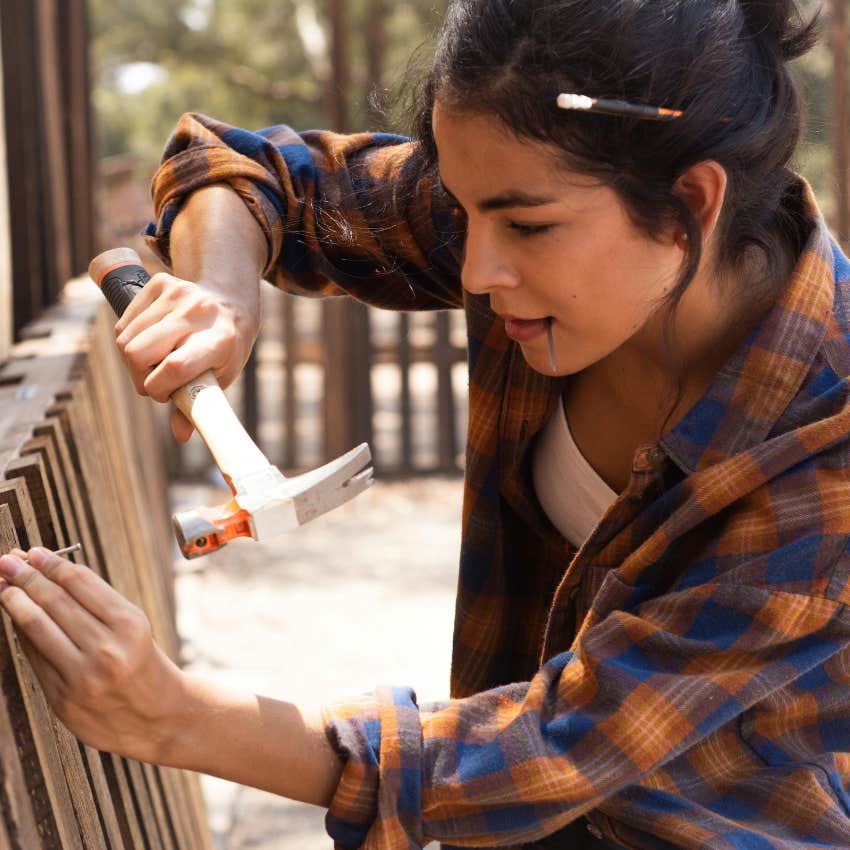
Donovan said she was initially concerned about how she might be perceived in a male-dominated workforce. She noted that every work site she’s been at is different, with some being more welcoming of women than others. But, with time, she’s learned that the most important thing she can do to prove herself is work hard.
 Los Muertos Crew | Pexels
“They want the job done, and they want it done well,” she said. “If you show up and work hard every day, you earn respect. As a woman, you walk in a room, and some men assume and decide a lot of things about you. The double standard got into my head and still bothers me to this day.”
Donovan can see the way that her own perseverance is creating “a safer environment for the next girl.” She explained, “Slowly and surely, we are changing that culture from within. I find a great purpose in that. The rules and tolerances to sexism and racism vary greatly from foreman to foreman and company to company. But personally, I’ve found my safe spaces.”
More women work now, but not in blue-collar fields.
Women have been joining the workforce in greater numbers since 1948 as ideas and opportunities have changed, but that doesn’t mean there’s an equal division of labor. Women have traditionally been relegated to what are known as “pink-collar jobs,” like teaching and nursing. These jobs have always been considered more suitable for women than others.
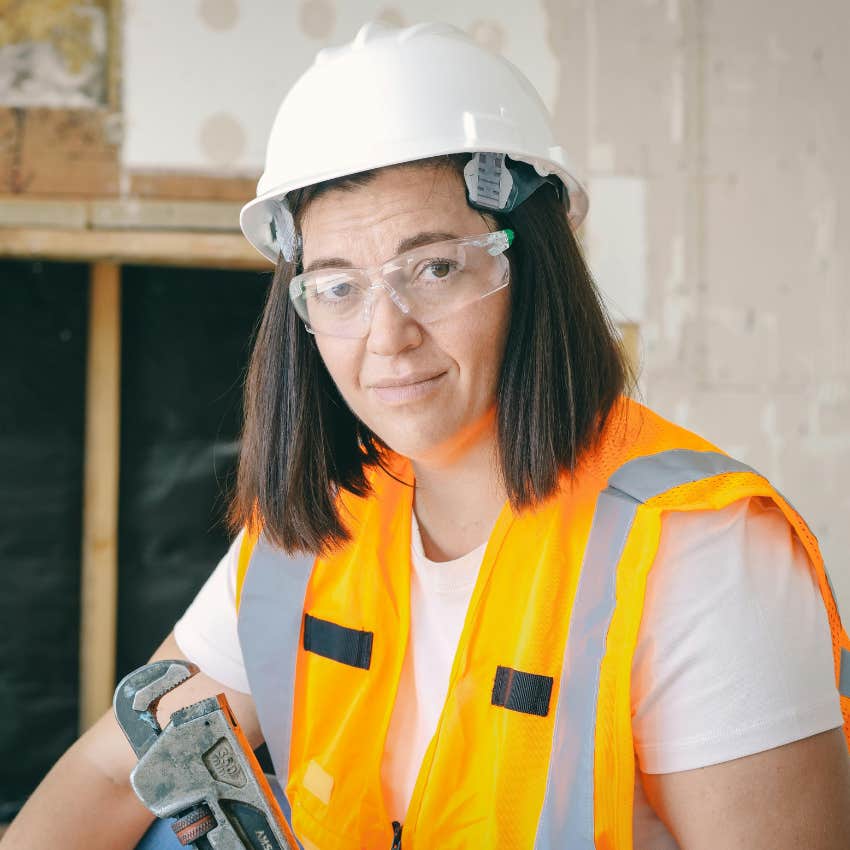
Alice Evans, a senior lecturer at King’s College London, discussed some of the reasons blue-collar jobs are filled by so many more men than women. Unsurprisingly, a strong possibility is that that’s simply how it’s always been done. Men don’t expect to welcome women onto their work sites, so they just don’t.
 Kindel Media | Pexels
There’s also the issue of physical strength, although that argument isn’t as relevant now that machinery has taken over many of the hardest tasks. On the flip side, this means technology can handle much of the work that humans were previously needed for, which could be decreasing opportunities across the board for blue-collar workers.
There’s really not a good answer for why more women aren’t involved in blue-collar work. There’s nothing wrong with a woman feeling like it’s just not something she wants to pursue, but there shouldn’t be some barrier to entry based on gender. As Donovan has proved, women can work just as hard as men.
Mary-Faith Martinez is a writer with a bachelor’s degree in English and Journalism who covers news, psychology, lifestyle, and human interest topics.


