
People Who Watch Horror Movies Usually Develop 4 Rare Traits Of High Intelligence
 Lysenko Andrii | Shutterstock
Horror movies have fascinated audiences worldwide with their spine-tingling thrills and chilling experiences. Some watch from beneath the comfort of their blanket, while others are leaning forward in their seats, waiting to be spooked out of their skin.
However, when you take a deep dive into the world of horror, you'll find that beyond the screams and jump scares, there’s a compelling interplay between the human brain and the eerie narratives unfolding on the screen.
People who like watching horror movies usually develop 4 rare traits of high intelligence:
1. They have an enhanced ability to cope with fear and anxiety
 Nomad_Soul | Shutterstock
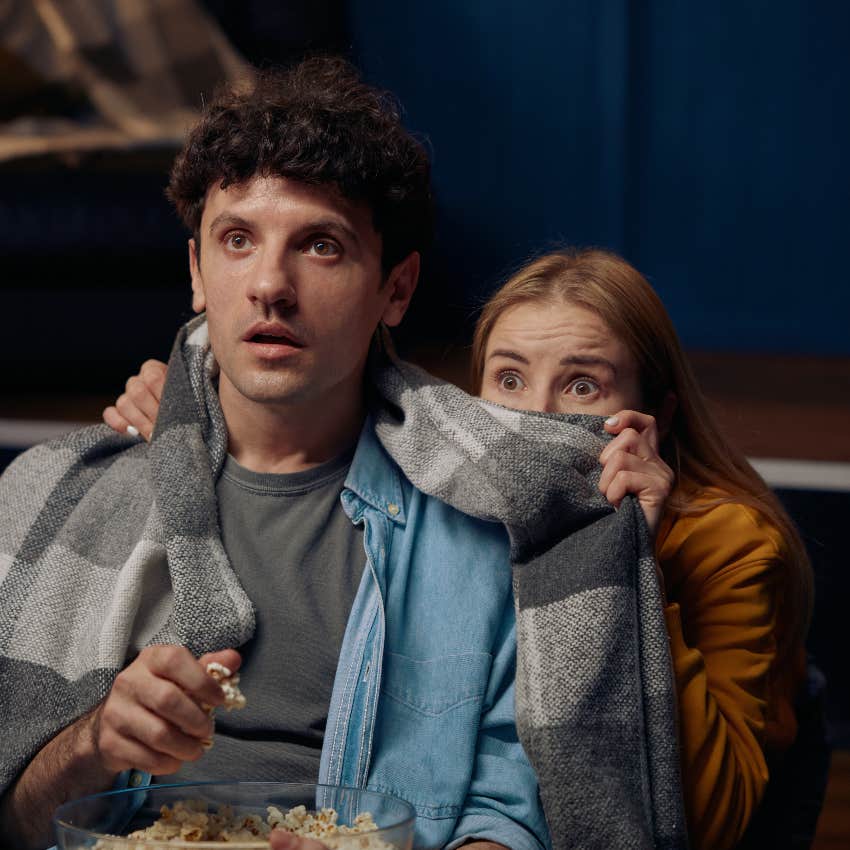
Every horror movie is notorious for its clueless main-character archetype, which deeply aggravates the audience with their ridiculous reactions to terrifying scenarios. However, according to a 2012 research paper published in the Review of General Psychology by Mathias Clasen, an associate professor of literature and media at Aarhus University, these repetitive themes actually train viewers' minds in numerous ways.
By observing what not to do in a scary scenario, viewers learn adept strategies for managing their fear and anxiety, which they can then apply to real-life situations.
While horror movies are certainly frightening, viewers inherently understand that the plot is fictional, and sitting through the discomfort of fear in a controlled environment improves one's ability to deal with fear and anxiety in real life.
It also strengthens one's resilience, adaptability, and problem-solving skills toward real-life challenges. Watching a horror movie may be disconcerting in the moment, but it actually prepares you for any potential crisis you may encounter in the future.
2. They have improved cognitive function and less stress
Surprisingly, a lot happens within the brain while you watch a horror movie. As the tension and suspense thicken, your body’s fight-or-flight response is activated. Your amygdala and hippocampus, located in the center of the brain, begin exchanging signals, according to researchers at the University of California, Irvine, who recorded the neuronal activity of nine people while they watched horror movie scenes.
Those unbearable jump scares that are hard to get through create an intense adrenaline rush in your body, similar to experiencing an actual fearful event. Once the stress of the scare ends, your brain releases several chemicals, such as dopamine, serotonin, oxytocin, and endorphins, which provide a sense of pleasure and relief. The release of these chemicals improves cognitive function and sharpens the senses, which can significantly help in a potentially life-threatening situation.
In essence, watching a horror movie is a form of exposure therapy. Exposure to unsettling, disturbing scenes allows viewers to develop emotional and behavioral strategies to cope with their real fears and anxieties.
3. They are more likely to reflect on their beliefs and values
 PeopleImages | Shutterstock
In addition to viewers experiencing an emotional rollercoaster of fear and relief beneath the thrilling gore and terror, horror movies offer a more profound message that prompts individuals to reflect on their own life values. Often, horror movies integrate themes relating to humanity, society, death's inevitability, the existence of evil, and life's fragility within the dark plot. These messages linger and play a role in our personal growth. We learn to navigate and understand our subconscious fears, moral compass, and how we would react in a high-stress event.
Especially when a horror movie has a particularly "happy ending," such as the protagonist surviving an attack or good conquering evil, we are left with an inspiring, prosperous feeling, which we can return to when faced with our own challenges. This process helps us grasp what truly matters, cultivating a deeper connection with ourselves. In other words, horror movies contribute to our personal growth. They allow us to face our fears and learn from them without irreversible trauma.
4. They are better at processing trauma and grief
 fizkes | Shutterstock
On that note, exposure to fictional horror can also offer a therapeutic approach to processing trauma or grief. By directly facing and desensitizing yourself to the daunting content of horror films in a comfortable setting, you can better navigate and explore your anxieties, phobias, and insecurities.
The chemical release in the brain that horror narratives generate, combined with the relatability of observing a protagonist navigate life following trauma or loss, influences an understanding of how to cope with personal trauma. This process can create a sense of relief and escapism from daily struggles.
While confronting these fears can lead to growth, what works for some may not work for others, so it’s important to be mindful of certain unwanted triggers that horror content may provoke. Within the vast array of horror plots and genres, not every movie offers the same experience. As a horror movie junkie myself, I have watched a fair share of films that left me with an unshakable eeriness for several days.
However, acknowledging the psychological and emotional benefits of horror movies can make watching a particularly terrifying one a bit less daunting. Whether you’re a fan of horror movies or not, they can astoundingly provide you with the opportunity to work out your mind and stretch your ability to process and confront fear.
Francesca Duarte is a writer based in Orlando, FL. She covers lifestyle, human-interest, and spirituality topics.

