
Parents Of Highly Intelligent Kids Do These 7 Things At Home Very Differently, Says College Advisor
 filadendron | Canva
Intelligence is widely objective, characterized by creativity, curiosity, and even genetics — there’s not one single way to embody high intelligence, to measure it, or to seek it, even if you’re a professional.
However, there are ways parents can help to allow all of the traits that influence intelligence to flourish. “I’ve been surrounded by incredibly smart people, in high school, college, and even graduate school,” college advisor YJ Heo on TikTok explained in a recent video on cultivating high intelligence in your children.
“I’m not a parent, but this is what I’ve learned from these highly successful people.” Heo offered specific guidance for parents who want to prioritize learning and scholarly pursuits in their kids.
Parents of highly intelligent kids do these 7 things at home very differently:
1. They embrace worldly dinner table discussions
Kids are kids — of course — and they deserve to have carefree fun. At the same time, there are situations where you should be talking to your kids like they’re adults. They may not fully understand, but simply sitting at the dinner table and listening to complex discussions between their parents will help them absorb current events. It will also teach them how to appreciate and engage in healthy discourse.
Encourage them to contribute. Share your job struggles, as parenting creators Janyl Smith and her husband do with their daughter Summer at the end of their day. “These kids inevitably become smart because they’re talking about the world around them,” Heo explained. “They’re forced to figure out what’s going on to report back and talk about it.”
2. Parents of highly intelligent kids encourage reading
 Monkey Business Images | CanvaPro
Children from reading-heavy homes have better success with reading comprehension and early cognition than their peers. Especially as technology grows and screen time consequences become more apparent, these children will start school miles ahead of their peers — grounded by curiosity with a strong practical foundation for learning.
“Over time, this knowledge accrual, processing of information, background, and understanding of how other smart people think allows kids to process information more efficiently,” Heo said. “But, you want to get your kid to read materials that they’re interested in.”
3. They actively create an environment that sparks curiosity
For kids that don’t have an innate sense of curiosity, Heo said parents have to make an effort to expose them to learning opportunities. Whether that means taking them to museums, playing classical music around the house, or openly embracing your own hobbies around them, you have to make the jump between potential in your children and success.
Show up for your kids and show up for yourself, even if it means educating yourself on a few worldly issues, reading your first book in a few decades, or making space for your own hobbies.
Curiosity has been identified as a key contributor to STEM success, with research showing that parents and teachers play a critical role in developing it through hands-on, exploratory environments. Whether it's a museum trip or simply letting kids follow their interests, actively cultivating curiosity has real and measurable cognitive payoffs.
4. Parents of highly intelligent kids talk about what's happening in the world
 Diana Light / Unsplash+
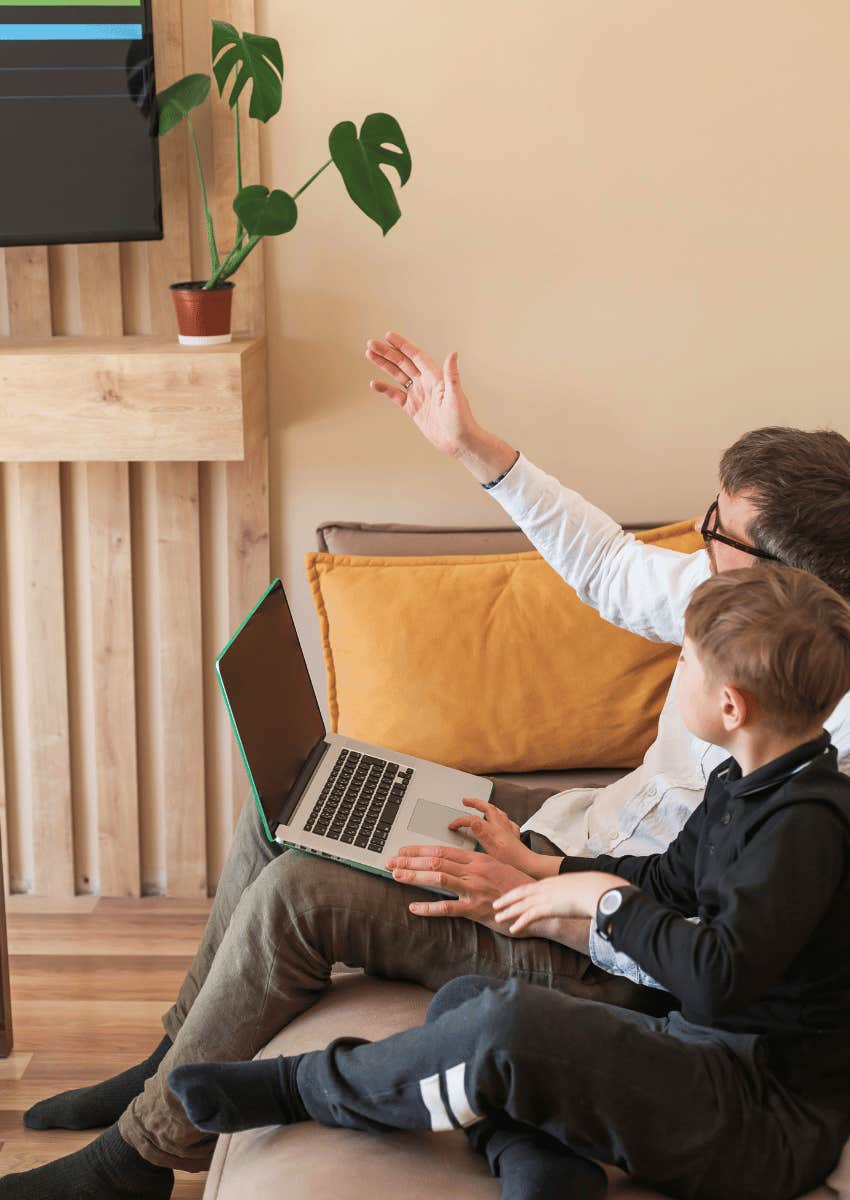
Of course, not every moment of your life and routine can be reading-centric or completely focused on a curated learning experience. Pop culture is important to discuss, as well.
“You’re not just there to be entertained; you’re there to figure out what the meaning behind it is,” Heo noted. “All movies, all books, all articles, by discussing them, the mind of a child gets activated.” Even more importantly, you're teaching them that learning is fun.
Couple and family therapist Mary Kay Cocharo confirms that kids who grow up in homes where effective communication is modeled are more empowered and self-assured as adults, navigating relationships and work with far greater ease. Teaching kids to engage with the world around them, not just absorb it, is one of the most practical gifts a parent can offer.
5. They act more like a coach than just a cheerleader
The most creative and intelligent kids often come from supportive environments where they were coached into embracing their authenticity and creating healthy habits.
“The parents seem like a coach. They’re not just playing the game for the kid; they’re telling the kid how to play the game,” Heo said. “They’re hands-on enough to coach the student like they’re a player.”
Early caregiver nurturance has been shown to have lasting effects on children's cognitive and emotional development. Parents who guide instead of just praise are giving their kids actual tools to build skills, not just a reason to feel good in the moment.
6. Parents of highly intelligent kids teach them how to relate to others
 Syda Productions | CanvaPro
Creativity and authenticity stem from empathy — how can you learn from someone else’s perspective, from a non-judgmental and shame-free place? That starts with your parents, specifically how they approached conversations with other people and resolved conflicts at home.
“You’re trying to get them to understand that you can process the world around you and have discussions without taking things personally,” Heo explained, adding that highly intelligent children also have the emotional intelligence to support their social interactions with other kids, as well as adults.
7. They create a judgment-free space where their kids feel safe to open up
“I couldn’t discuss just anything with my mom,” Heo shared, “because she was a little more extreme in her responses. Whereas my father was really open to hearing what I had to say. He withheld judgment to process things with me, and we had deeper discussions.”
Children who grow up in judgmental households not only struggle with incorporating healthy habits in their lives and nurturing intelligence, but they also experience higher rates of depression, anxiety, and social struggles in adulthood compared to their peers.
“If a child has a parent who appears to judge them, they’re going to shut down communication that inhibits them from processing,” which essentially halts their cognitive growth and curiosity.
You don’t need tons of resources, money, or support to instill a love of learning in your kids. Of course, some children grow into highly intelligent adults, even without encouragement and resources — some even argue, like Heo, that they succeed despite their circumstances.
At the end of the day, intelligence is objective — all we can do is support our kids, cultivate safe spaces for them to thrive, and communicate openly without the fear of “not knowing” or looking silly.
Zayda Slabbekoorn is a senior editorial strategist with a bachelor's degree in social relations & policy and gender studies who focuses on psychology, relationships, self-help, and human interest stories.

