
Parents Should Avoid 11 Vaguely Offensive Phrases If They Don't Want To Alienate Their Grown Children
 KaterynaUKR | Shutterstock
We all know the damage that can be done when parents emotionally alienate their young children, but what about when a parent behaves that way when their kids are grown adults? Sadly, many parents don't realize when it happens due to the things the say, especially when said regularly over time.
Fortunately, by recognizing these patterns of behavior and throw-away phrases, parents have a chance to stop alienating their grown kids.
Parents should avoid 11 vaguely offensive phrases if they don't want to alienate their grown children
1. 'When are you going to settle down?'
 fizkes | Shutterstock
Many adult children already feel an overwhelming pressure to "settle down" and get married. Often, when they get to a certain age, they see all their friends getting married and having kids they can't help but wonder when it'll be there turn.
So when they're also experiencing it at home from parents and family members, it can lead to resentment.
Even when parents think they're being helpful, it's still possible for them to subconsciously add pressure and anxiety to their lives by subtly pressuring them into traditional expectations. And when it comes to marriage and kids, that's not something parents should be rushing.
2. 'You need to grow up'
 ViDI Studio | Shutterstock
Feeling heard and understood in conversations is a critical part of happiness in all sorts of different relationships. For parents of adult kids, it's doubly important, as these kids can easily push away.
When a parent tells an adult kids to grow up, it's just plain hurtful. Sadly, this usually happens when a grown child is talking about something that is troubling them and instead of hearing them out, a parent is shutting them down.
Respect is a two-way street. It's important that adult children are empathetic to the discomfort and anxiety their parents may be experiencing, but still advocate in setting boundaries and communicating when phrases like this are offensive to them.
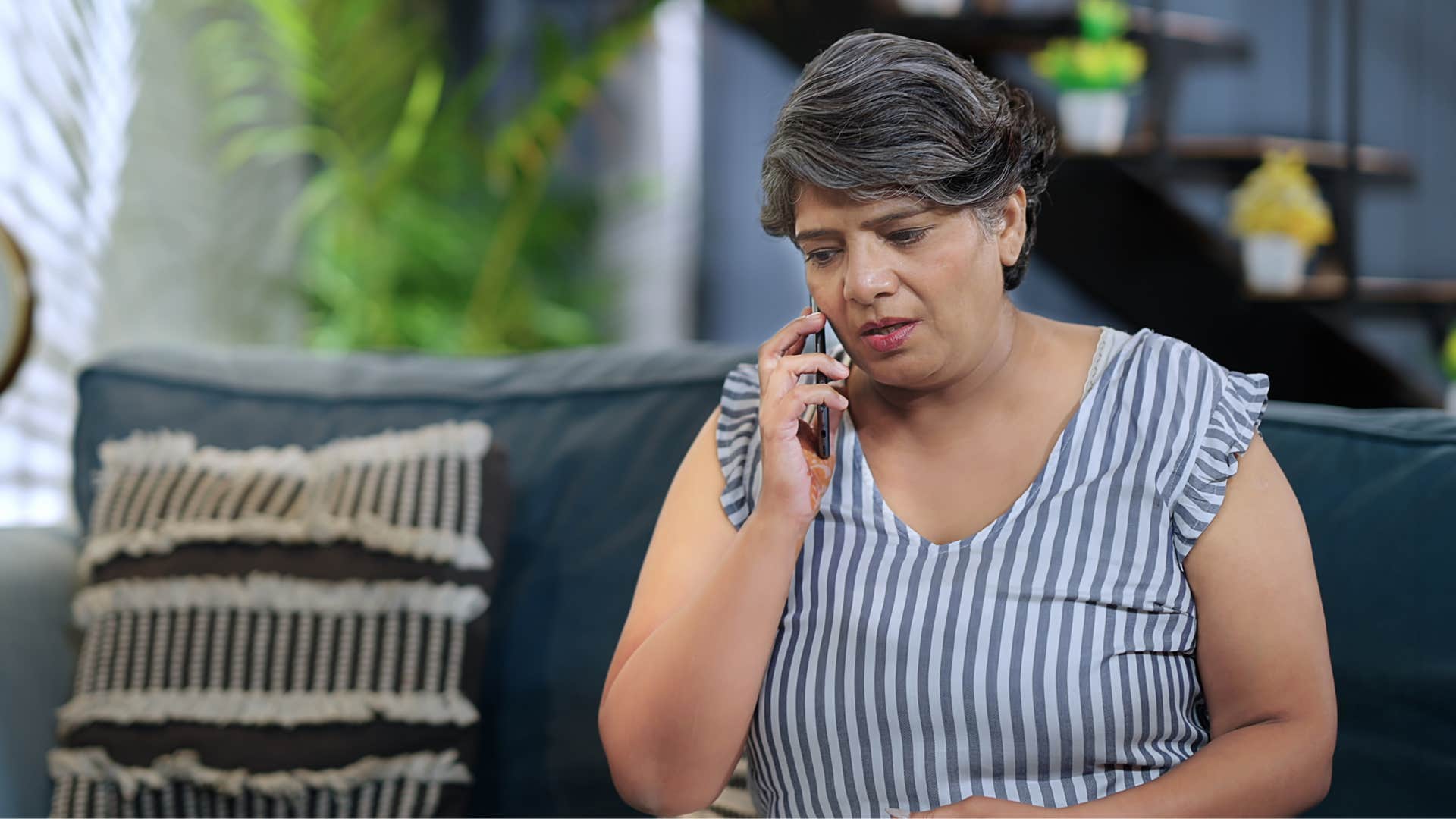
3. 'You have it so much better than I did'
 Raushan_films | Shutterstock
Many parents feel obligated to protect their children, even into adulthood. But that doesn't give them the right to dismiss what their grown child is going through by comparing them to a world that no longer exists.
Almost nothing is the same these days. The jobs market is a wreck for Gen Z, starting a family feels daunting and buying a home is basically impossible. No wonder these grown kids don't want to hear it from their parents!
So, yes, parents do have a lot of advice and wisdom to share, but using phrases like this to compare their own situation with their kids' is just plain dismissive and shows that the parent isn't really listening.
4. 'You're being so dramatic'
 fizkes | Shutterstock
Some people insist there's no such thing as overreacting. After all, we feel what we feel and feelings aren't all that controllable. But with maturity comes learning how and when to express those big feelings.
Sadly, instead of guiding grown kids toward being more emotionally aware, many parents use phrases like "you're being dramatic" or "you're overreacting" that invalidate their kids' emotions and urge them to disconnect.
It's often uncomfortable and awkward to open yourself up to vulnerable conversations, and if these grown kids are being insulted and dismissed, they'll stop coming to their parents to talk. There are plenty of better, more supportive, ways to guide them toward more emotional control.
5. 'You never make time for us anymore'
 Fast-stock | Shutterstock
Rather than expressing their needs and communicating honestly with their kids, many parents use guilt-trips to get their kids to spend more time with them. Phrases like "you never make time for me" often alienate adult kids because they are usually untrue. Often, the child has made time for their parents, maybe just not as much as their parents wish.
Of course, phrases like this aren't always inherently malicious, they're often driven by a parent's anxiety and discomfort with natural disconnect. But they can be perceived in negative ways by adult kids living their own lives and crafting their new routine. Still, separation is natural and healthy when kids grow up.
In some cases, according to licensed psychologist Lynn Margolies PhD, people who rely on guilt-tripping phrases like this lack self-awareness and confused by their intense emotions. Still, parents of grown kids should know better than to communicate using guilt trips. It's ineffective and immature.
6. 'You have no idea how the world works'
 Motortion Films | Shutterstock
Parents have the power to support their adult children, even when they don't agree. You can support someone's emotions and make space for their opinions without belittling or condemning them at the same time.
Saying, "you don't know how the world works" is belittling coming from anyone, but it's doubly hurtful from your own parents.
According to a 2015 study on parental estrangement, parents and grown kids have very different explanations for their distance. The study reports:
"Parents reported that their primary reason for becoming estranged stemmed from their children’s objectionable relationships or sense of entitlement, whereas adult children most frequently attributed their estrangement to their parents’ toxic behavior or feeling unsupported and unaccepted."
It's the culmination of all of these things, over time, and with persistence that largely fuels these familial breaks. Often, they're fueled by phrases like this that undermine an adult child's intelligence or experience.
7. 'You'll understand when you're older'
 fizkes | Shutterstock
There are topics that are hard to explain to young kids, but once your children are grown, you should be able to talk with them about anything that's appropriate between a parent and adult child.
If you say, "you'll get it when you're older" you're basically implying that your kid is immature. If it's something about aging bodies or mid-life, it's still worth explaining and not dismissing, as your grown child is completely capable of empathy, even if they don't fully undersatnd.
While many parents may still view their children as little kids, it's important that they recognize the experience and intelligence they've gained in adulthood. They should be invited into their parents' lives, not shut out.
8. 'That's not a real job'
 MAYA LAB | Shutterstock
This should be obvious, but parents should avoid telling their kids their job (or aspirational career) isn't a real job. Not only is it patently insulting, it also shows that the parent doesn't have a clue what it's like to earn a living as a young adult today.
These days, with a new digital landscape and shifting social and professional norms, it's not uncommon for adult children to make a living in industries their parents never experienced. Maybe they work as an influencer or a brand rep, or something that simply didn't exist when the parents were young.
However, that doesn't make these career ventures or life choices any less valid, especially if they're made in an adult child's best interest.
9. 'You never take my advice'
 Amnaj Khetsamtip | Shutterstock
Licensed marriage and family therapist Sarah Epstein argues that unsolicited advice-giving is one of the common ways parents subconsciously sabotage their conversations with adult children. To their grown children, it sounds like criticism.
Rather than using a phrase like "here's my advice" or "if you just did this, it'd be better," adult children want to hear supportive language from their parents like "I have confidence you'll figure this out" or "that sounds difficult, I'm sorry you're dealing with that."
If parents really do want to help, they can ask, "I have some advice, if you're interested" and leave it at that until they show interest.
10. 'I sacrificed so much for you'
 fizkes | Shutterstock
One of the phrases parents say that is deeply offensive to their adult kids is "I sacrificed so much for you," which can push adult children away from their parents, urging kids to feel a sense of obligation towards their parents for giving them affection, supporting them, or providing them with the bare minimum growing up.
According to research published in Psychology and Aging, the resentment and tension that often fuels parent-child relationship that become no-contact can be sparked with phrases like this, encouraging adult children to separate themselves from the transactional nature of this relationship.
After all, kids don't ask to be born or raised. When people decide to become parents, sacrifice is part of the deal.
Great parents who cultivate healthy relationships with their adult children teach their kids to be grateful, but they never hold their affection or care over their kid's head.
11. 'If you really loved me, you'd do this for me'
 Andrii Nekrasov | Shutterstock
While phrases like this may seem obviously awful when you read them here, they're often thrown around in casual conversations at home in a way that makes them seem normal. This is sometimes even worse than outright offending their grown children. It sneakily undermines their well-being.
Transactional relationships are rough for anyone, but when your parents make you feel like you can only show your love by doing their bidding, it can undermine a young adult's self-esteem and make them wonder if they're worth loving at all.
Zayda Slabbekoorn is a staff writer with a bachelor's degree in social relations & policy and gender studies who focuses on psychology, relationships, self-help, and human interest stories.

