
Engaged Teacher Asks Her First-Graders For Marriage Advice & Their Responses Are Actually Very Insightful
 Studio Romantic | Shutterstock
Kids have the uncanny ability to be brutally honest without malice. That's probably why a teacher named Kaylee Abernatha turned to her first-graders for some marriage tips and tricks now that she's engaged.
Sharing some of the responses from her students, their advice to Abernatha, who had just gotten engaged, was both comical and also a plenty insightful. Kids don't beat around the bush. They're honest and forthright and much more observant than many adults give them credit for.
An engaged teacher asked her first-graders for marriage advice & their responses were actually on point.
Abernatha had created multiple worksheets for her students to fill out. Some of the prompts were "To solve a conflict we should..." while others asked the first graders to respond to "What should the groom know about your teacher before she gets married?"
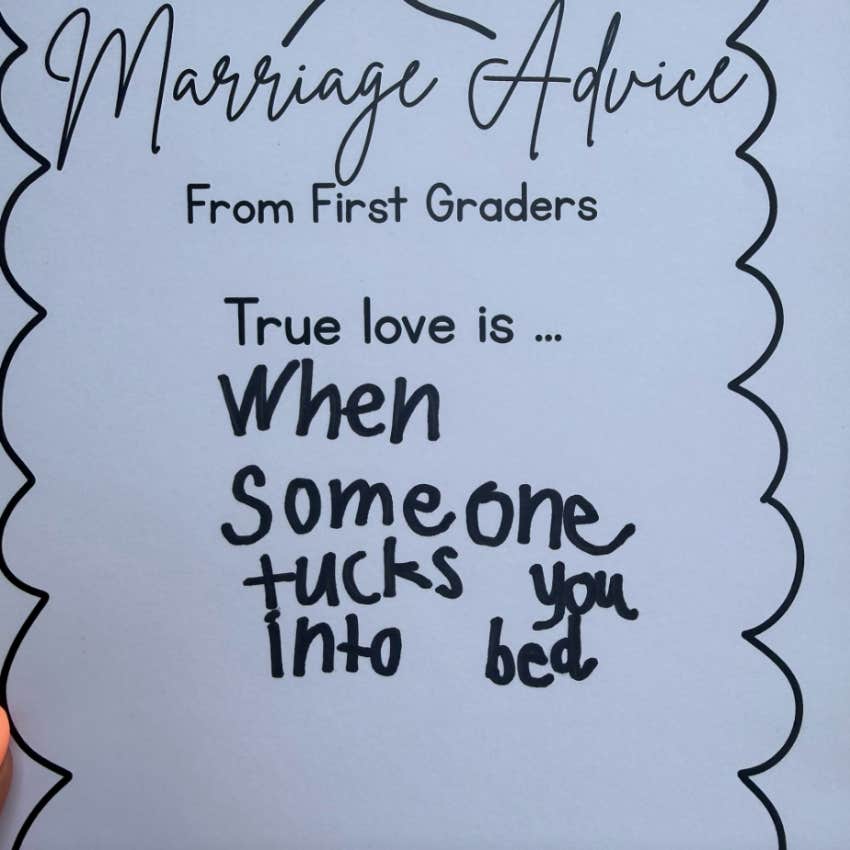
For the latter, seven-year-old Henley wrote to Abernatha's fiancé that "she needs coffee and has to get her nails done." When asked what true love is, six-year-old Sylvie wrote that it's "when someone tucks you into bed."
 Studio Romantic | Shutterstock
In another prompt, Abernatha gave her first-graders the prompt, "Make sure you ALWAYS," and seven-year-old Isla proudly wrote "Dance," before adding that married couples should never "yell." Seven-year-old Manny advised that married couples should do something extremely fun and exciting to spice things up by going to Costco.
Despite being only six or seven years old, these kids offered some rather insightful advice to married couples. A lot of the common themes were kindness, having fun together, and avoiding unnecessary arguments by doing things like breathing or not yelling. It's honestly funny how children are just able to break down complicated topics to the most simple of truths and actions.
For married couples, having fun and conflict resolution are two important aspects of making things work.
Many of Abernatha's students touched on the fact that doing simple things for fun can make the biggest difference. Things like dancing and just spending time together are actually key pieces of making a marriage last.
Experts have long said that couples who play together usually end up staying together. So much so that they've insisted couples should be scheduling intentional date nights at least once a week, explore new creative hobbies together, take dance lessons, and even visit a comedy club together to experience some laughs.
 Drazen Zigic | Shutterstock
It's important for married couples to carve out time. But above all else, conflict resolution, which these third-graders were right about, is even more important. Knowing how to address disagreements and arguments as a married couple can make or break the union.
"Here is the major premise: we are all going to have conflict at times – it’s a fundamental fact of human relationships. But when we make the conflict transparent, when we take accountability for our role in the conflict, and when we resolve the conflict, we become closer," explained psychiatrist Eugene V. Beresin.
Despite only being in first grade, these young kids seemed to have really cracked the code for a long-lasting marriage. They may not have the expertise to break down some of their responses, but at the heart of it, they know exactly what adults should and shouldn't be doing.
Nia Tipton is a staff writer with a bachelor's degree in creative writing and journalism who covers news and lifestyle topics that focus on psychology, relationships, and the human experience.

