
The Exhausting Charade Of Marriage And Motherhood (And The Relief That Came When I Stopped Pretending)
 Alex Unders | Shutterstock
It was in the produce section of a Trader Joe’s, next to a mound of teeny-tiny avocados, that I ran into Bea’s mom. Like so many mothers, she was listed in my phone as “Bea’s mom” because she was only relevant to my life in relation to her role as the person who drove her daughter to volleyball games and sat in vague proximity to me on high school gym bleachers. I did not know her actual name, and I doubted that she knew mine.
Both of our daughters had just concluded a rough volleyball season, so we talked a bit about that. She mentioned her daughter’s anxiety and the increasing frequency of her panic attacks, one of which had transpired in court. I referenced my recent divorce and how my daughter was struggling to navigate this recent life transition.
Bea’s mom said, “You got divorced?” I’m quite sure that she, along with all the other parents, noticed the sudden absence of my husband sitting next to me on the high school gym bleachers, but no one had asked me about it. Divorce is not exactly a casual topic of conversation one typically broaches between volleyball sets.
I’d never seen a husband sitting next to Bea’s mom, but I’d never inquired about the circumstances. When she found out I’d gotten divorced, suddenly the tenor of our conversation changed. Turns out, Bea’s father, like my daughter’s father, had struggled with mental illness.
Unlike my daughter’s father, he’d died by suicide. She’d been left with two kids, one with special needs and one who began having panic attacks, along with a loose network of friends who suddenly made themselves very scarce.
We stood there amidst the grocery store bustle, leaning on shopping carts halfway filled with Persian cucumbers, Greek yogurt, and mandarin oranges, talking about mental illness, suicide, single parenting, and divorce.
We talked for the better part of 30 minutes about the exhausting charade of marriage and motherhood
 Getty Images / Unsplash+
When we parted ways, I still didn’t know her name. But I knew her story, and her trauma, and her fear. After 30 minutes in a Trader Joe’s, I knew her better than nearly all the other moms listed in relation to their children in my phone.
Shortly after my encounter with Bea’s mom, I ran into another mother of a volleyball teammate, Sarah, at ... yep, Trader Joe’s. When you’re in the Trader Joe’s/volleyball parent circuit in a mid-size city, run-ins like this are quite common. I like Sarah’s mom a lot. My daughter also plays basketball with Sarah, and I’ve remarked more than once that I wish she and Sarah were better friends, so I could become better friends with her mom.
Sarah’s mom is married to a friendly, mild-mannered man who reliably attends his daughter’s games and sometimes even participates in the group text threads. As such, he’s one of the few dads for whom I have contact info. He’s listed in my phone as Sarah’s dad.
Standing in the grains and condiments aisle, we chatted about our daughters’ final volleyball game (a brutal one), whether or not they were going to play basketball again (we both hoped so), and our impressions of the district high school (we’ve heard good things). Then we went our separate ways.
I have had so many conversations with other married mothers like this over the years, both before and after my divorce
And while there’s nothing wrong with small talk, I have found it difficult to ever get past the genial, superficial veneer. By contrast, I am consistently finding that when I have an opportunity to delve into conversation with other unmarried mothers — whether divorced, widowed, or never married — things get real deep, real fast.
I’m sure part of it is that we feel an immediate sense of kinship, an understanding of shared social stigmas and challenges. But also, we’re no longer performing.
Some of us never cast ourselves in the role of Wife; some of us dutifully played the role for years. We polished that exterior veneer. We posted the happy family photos. We wrote the drippy anniversary tributes. We organized the date nights, and we posted those photos, too.
We made small talk on the playgrounds and in the bleachers. We babbled on about our husbands and our family plans. We were known to the world largely as So-and-So’s Mom or So-and-So’s Wife.
I am still known to a sizable portion of my world as So-and-So’s Mom. But interestingly, once I liberated myself from the performance of marriage, I also, quite unexpectedly, found myself liberated from the performance of motherhood.
Society was already disappointed in me. It had already lowered its expectations. I had already failed in the role of Wife; thus, my kids were already doomed to a lifetime of emotional turmoil and behavioral struggles.
I knew the performance of marriage was weighing on me, but I had underestimated its heft. I didn’t know the parallel performance of motherhood was weighing on me until society yanked me off the stage.
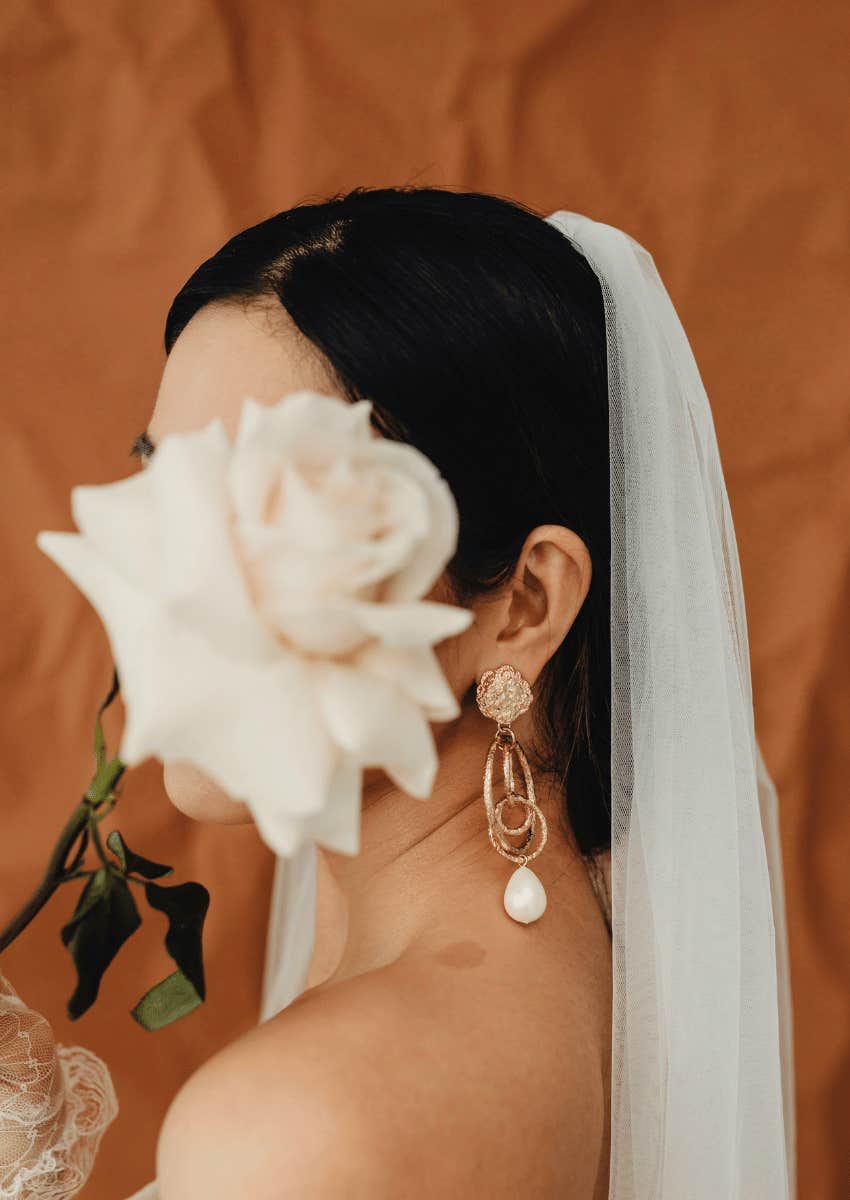
The performance of marriage, of course, starts with a literal performance
 Karolina Grabowska / Unsplash+
And oh, how we love our weddings. Even though younger people increasingly don’t see marriage as necessary to a long-term, committed relationship, the wedding industry continues to rake in billions, with consistent year-over-year growth.
I do appreciate ceremonies and traditions; if anything, I think we’d benefit from more of them. But the more I think about weddings, the more I can’t help but think about how supremely weird they are.
There is no other relationship in our life to which we publicly proclaim our commitment in front of dozens to hundreds of people. We have ceremonies to mark other rites of passage — baby showers, graduations, funerals — but in none of these are we asked to confirm our lifelong love for another person.
Even when I birthed my first child, marking the beginning of one of my most transformative relationships, I was simply showered with baby gear, then sent home from the hospital in a diaper, then asked in a not-so-friendly email to confirm when I was coming back to work.
Motherhood in a nuclear family context becomes a performance in its own right, but no one really wants to hear about, much less witness, the birth. There’s no open bar, no DJ, and far too much blood. Sure, go ahead and post a photo, but for the love of God, please get dressed in proper clothes first and try to look halfway presentable. And clean up that baby while you’re at it.
The performance of marriage starts with the wedding, but that’s only the beginning. After we’ve publicly pronounced our lifelong commitment in front of dozens to hundreds of people, we feel pressured to hold up our end of the bargain. Our spouses become the center of our respective social spheres. We’ve now been inducted into the “marriage club,” which largely entails hanging out with (and making small talk with) other married couples.
If we have kids, we gravitate toward other married couples with kids. Our unmarried and childfree friends gradually recede into the background. People in whom we once confided now get generic, breezy updates about the contours of our lives. It’s almost as if, in signing our marriage contract, we blithely signed a non-disclosure agreement that prohibits us from sharing the messiness, darkness, and fear.
Maybe we have a close friend or two in whom we occasionally confide. To the rest of our so-called friends, we can vent our frustrations about clueless husbands and fussy kids. No shame in that. But we keep the rest to ourselves. No need to air dirty laundry.
Plus, we auditioned for this role. We made a choice, and we raised our hands to be chosen. If it turns out we’re not too happy with the arrangement, that’s on us.
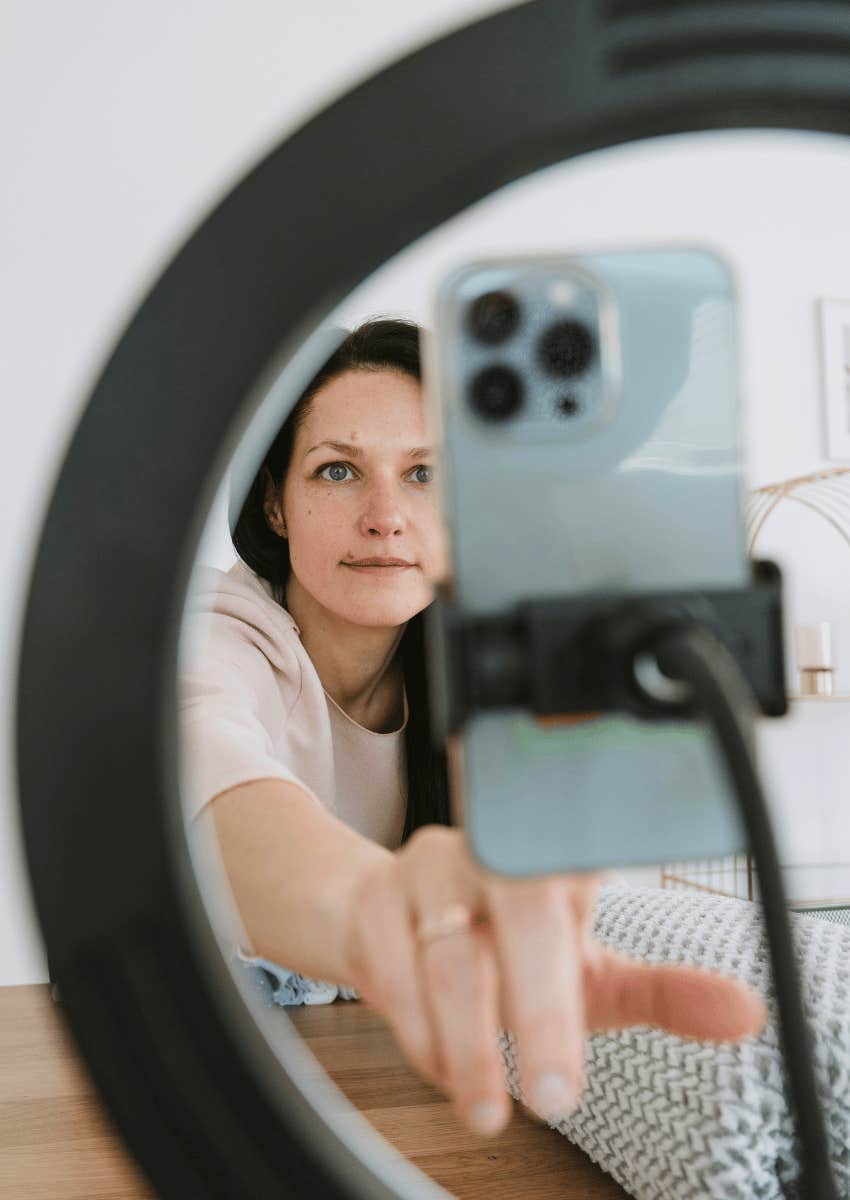
Social media has only made the performance of marriage, along with the attendant performance of motherhood, all the more performative
 Anita Austvika / Unsplash+
It’s easy to make it look good in photographs. And our social worth as women is still so largely dependent on how successfully we execute our roles as wives and mothers.
It’s worth noting that, tradwives aside, the will and motivation to present a perfectly curated nuclear family life on social channels seems to be slowly fading. “Mommy bloggers” are no longer the rage, thank goodness, and as Vogue writer Chanté Joseph points out, paying constant tribute to a partner online is becoming “culturally loser-ish.“ Where “women’s online identities [once] centered around the lives of their partners, a situation rarely seen reversed,” she says, "there has more recently been a pronounced shift in the way people showcase their relationships online."
But while there may be less gushing about our partners and children on Instagram, there is still no shortage of photos or posts that make married hetero mothers feel pressured to step up their game, or feel less than, because everyone else makes it seem so effortless.
I myself did my share of gushing, mostly on Facebook, because I’m a Xennial. I didn’t post often, but when I did, I sure made it look good. So good, in fact, that those who weren’t super close to me in real life were shocked when I announced my divorce.
What about that happy family photo I’d posted last summer, the one from the family reunion in Colorado? What about the triumphant photo of my husband about to start his new job from just a couple of months ago, made possible by an 11-year educational journey, during which I’d so selflessly supported him? What about all the challenges life had thrown our way, the ones I’d breezily referenced in my anniversary tributes, the ones that made us so much stronger?
We all know there’s a gap between our curated lives and our so-called “private” lives, but I’m always astonished by how easy it is to forget this when I allow myself to start scrolling. We can stage our backgrounds and filter out the under-eye shadows. We know it isn’t real, exactly, but it looks so convincing, and other people’s pronouncements of eternal love and happiness sound so persuasive.
It’s not that all of us are always miserable behind closed doors; it’s just that we can’t crop out the mess. Other people’s perfect-seeming family lives exert their own form of pressure, but what’s so uniquely exhausting about the performance of heterosexual marriage and motherhood is the pressure we feel to continue it in the privacy of our homes.
A well-known study of 23,000 mothers found that single mothers do less housework, enjoy more leisure, and get more sleep than married mothers. I first learned about this study when I was still married, and I was skeptical. After all, it flies in the face of every harried, exhausted single mom stereotype.
But now I’ve lived both realities, and it tracks. As Slate contributor Lara Bazelon notes:
Single mothers… have no need or even opportunity to “perform gender” by demonstrating obeisance to centuries-old conceit that good mothers prioritize everyone else but themselves. There’s not much point in putting on a play if there’s no audience.
What a relief to stop performing in the comfort of my own home, and what a relief to announce my divorce on Facebook and end the charade
The perfect nuclear family photos now make me feel no yearning. That’s because the perfect nuclear family is a load of silliness, and it’s no longer something to which I aspire
Perhaps it seems paradoxical that I feel far less lonely after marriage than in marriage, particularly considering all the propaganda out there about marriage as insurance against loneliness. But it makes lots of sense if you allow yourself to really think about it.
Of course, it’s on me to put in the effort to make and maintain friendships, and of course, I am no longer welcome in the married couple dinner party circuit, but at the end of the day, my social life is no longer a performance. I am prioritizing real, raw relationships, and I am finding so many other women who are hungry for the same.
When I mentioned my recent divorce while presenting at a conference last year, one of my company’s clients approached me after the session, her eyes tense as she watched the last of the attendees shuffle out of the room. She leaned in, even though there was no one left to overhear us, and told me she was going to file for divorce when she got home from the conference.
Over the course of 15 minutes, I learned about her struggles to feel seen in her marriage and the burnout she was grappling with as a VP and default caregiver.
Thank you for talking openly about your divorce, she told me. It made me feel less alone. And it gives me hope that you seem so happy and at peace on the other side.
Whether we’re in conference rooms or in the produce section of a Trader Joe’s, it’s mind-boggling to me how many of us share similar struggles and don’t even know it.
Divorce offers a clear means of connection, and a clear means of escape from the performance of marriage, but whether married or not, we can all look for opportunities to practice more vulnerability. This doesn’t mean we have to feel compelled to spill our deepest, darkest secrets to anyone who will listen. It doesn’t mean there’s no place for small talk or casual friendships.
It does mean rigorously calling into question what we’re doing in the name of being a “good wife” or “good mom” and what we’re doing in the best interests of ourselves and those we care for. It means prioritizing relationships beyond the nuclear family and calling upon friends and extended family when we’re struggling.
Paradoxically, it’s vulnerability that has made me stronger and more resilient. When I built walls and tried to adhere to impossible external standards, or at least offer the illusion that I was adhering to impossible external standards, I became a shadow of myself.
Yes, there are social contexts that still call for some degree of performance, but I’m no longer the wife or mom eager to prove my bliss or staunchly defend my happiness to those who know better. And in the privacy of my own home, I can let down my guard, be silly with my kids, and leave some dishes in the sink.
I can be honest with them that I don’t always know what I’m doing, but I’m doing my best. That it’s okay to be messy and imperfect. It’s okay to cry sometimes and yell sometimes. And it’s definitely okay to sing off-key in the shower or bust out cringey dance moves in the kitchen.
Sometimes you don’t know what in life is weighing on you until you free yourself from the weight. And then you wonder at how you lived under it, gasping for breath beneath strained smiles, for so long.
Kerala Goodkin is an award-winning writer and co-owner of a worker-owned marketing agency. Her weekly stories are dedicated to interrupting notions of what it means to be a mother, woman, worker, and wife. She writes on Medium and has recently launched a Substack publication Mom, Interrupted.

