
Boomers & Gen X Can Barely Handle 9 Basic Life Skills Gen Z Mastered Easily As Kids
 stockfour | Shutterstock
You don't have the same values as your grandparents. Chances are, your life looks different from your adult children's. That's life.
Especially when the world that older generations grew up in literally doesn't exist anymore, they can't expect Gen Zers and other young people to have the same values and daily habits. Life is different, and it will continue to evolve and change. However, that also means there are many basic life skills that boomers and Gen Xers can barely handle, despite Gen Zers mastering those same skills easily as kids.
Gen Z mastered basic life skills that boomers and Gen X can barely handle
1. Noticing fake news and AI photos
 insta_photos | Shutterstock
According to a Princeton and NYU study, in 2016, adults over 65 were seven times more likely to fall victim to misinformation and fake news online by resharing articles than their counterparts under 29. Especially with added AI influence and more digital misinformation than ever spreading around social platforms and the internet, it's become even harder for everyone to differentiate between what's real and what's fake.
While they still often fall victim to AI images and fake news, Gen Zers are the most digitally literate generation to date. Not only did they grow up online, creating a foundation of skills and knowledge on the internet, but they also learned to adapt through all kinds of social eras, including the influence of AI and tools like ChatGPT.
2. Slow living
Considering so many Gen Zers grew up on the internet and alongside constant stimulation, as adults they're looking for a way to disconnect. While they might be called "lazy" by other generations who burnt themselves out in the face of hustle culture, in reality, they're just protecting their well-being and health.
On top of that, financial and social barriers to big milestones, like starting a family or buying a house, are taking a lot longer for young people. So, other aspects of their lives are slower and more mindful than they might have been for boomers and Gen Xers at the same age.
3. Making time for self-care
On top of living mindfully and slowing down the pace of productivity in their lives, Gen Zers are also prone to leisure and self-care. They're investing in their well-being in so many ways, hence their appreciation for work-life balance, compared to older generations.
These wellness and self-care concepts they leverage in adulthood were also built very early in their lives, usually from social media influencers and trends. They've changed drastically from what they were for Gen Zers as kids, but the appreciation for self-care and investing in themselves in a world of unmet promises has certainly not changed.
4. Talking about their mental health
According to a study from the Indian Journal of Psychiatry, mental illness is still stigmatized for many individuals in older generations, preventing them from not only seeking help and support, but also speaking about and acknowledging their own mental health struggles.
While many young people still struggle with these things in the society their parents and grandparents created, they are far more open. Whether it was the parenting styles or the social media access they had as kids, they learned to be more forthcoming about their internal struggles.
5. Accepting inclusivity
 DavideAngelini | Shutterstock
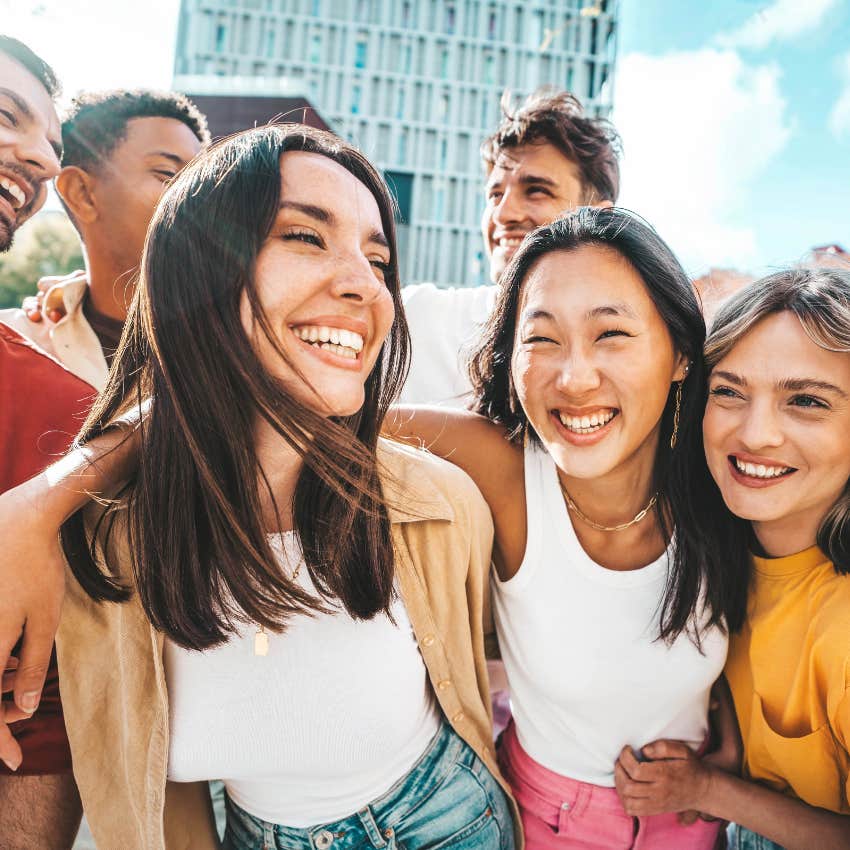
One of Gen Z's collective values is authenticity, not just for themselves but for others. They want people to feel empowered to be their most unique selves, which often means investing in the kinds of diversity that older generations still find somewhat taboo and controversial.
Of course, not every Gen X or boomer is starkly against inclusivity, but these generations' stake in work ethic and tradition sometimes make it hard to accept Gen Z's new challenges and beliefs. Even in the workplace, Gen Z is nearly two and a half times more engaged when they perceive their managers and leaders to be more inclusive. It matters to them collectively, not just for acceptance with their own personal identity, but for diversity in their spaces and communities.
6. Adapting to new technology
From cell phones to social media platforms and AI in adulthood, Gen Zers have spent their lives adapting to new forms of technology. It's part of what gives them an edge. They have the digital literacy to protect their safety and well-being personally, but also bring all kinds of efficient and productive skills to the workplace.
Adaptability is a skill everyone needs and often manifests in unique ways depending on the generation. However, for young people, being tech-savvy is a unique yet basic life skill on its own.
7. Building communities fully online
All we want as humans is for people to connect with a community that understands who we are at our core. We want to feel like we belong with someone or to something larger than ourselves. For older generations, that usually means finding people to talk with in person or going to third spaces to interact.
However, for most young people, those relationships are nurtured and sometimes formed entirely online. Whether it's social media apps and mutuals or chronic text threads that help people stay connected, they're used to communicating almost entirely through their phones. While it may not be healthy at the scale they're communicating in, it's better than nothing, especially in a lonely, disconnected world.
8. Searching for information online
Whether it's searching through Reddit or trying to stalk someone's Instagram page to figure out who they're dating, Gen Zers are investigative experts online. They learned these skills through practice and years of experience, making mistakes that often cost them socially and forced them to learn anonymity and stealth.
Even though many today are resorting to TikTok over traditional search engines, they're still flexing the investigative muscle that many older generations, who have practical and tangible skills, struggle with.
9. Embracing unconventional lifestyles
 Artie Medvedev | Shutterstock
Whether it's choosing creative paths for work or living less buttoned-up lifestyles like their parents and grandparents, younger generations have no problem living unconventionally. Most are even quite proud of their rebellious spirit, whether it's in their dress codes or the social norms they choose to challenge.
Compared to boomers and Gen Xers who grew up in time periods where traditional norms were often enforced without any other choice, living unconventionally can feel scarier and more uncertain than it does for young people.
Zayda Slabbekoorn is a senior editorial strategist with a bachelor's degree in social relations & policy and gender studies who focuses on psychology, relationships, self-help, and human interest stories.

