
A CFO Warns Retiring At 65 Could Be A Huge Mistake And It Comes Down To One Crucial Number
 Andrii Nekrasov | Canva
As a CFO and a long-time advocate of the Financial Independence Retire Early (“FIRE”) movement, I often polarize opinions. Most people plan their retirement around the age at which they can finally stop working.
But there's another number that actually means more, and nobody is paying attention to it. A number that determines whether those hard-earned retirement years will be spent enjoying the life you built or whether they'll be spent rushing from one doctor's appointment to another.
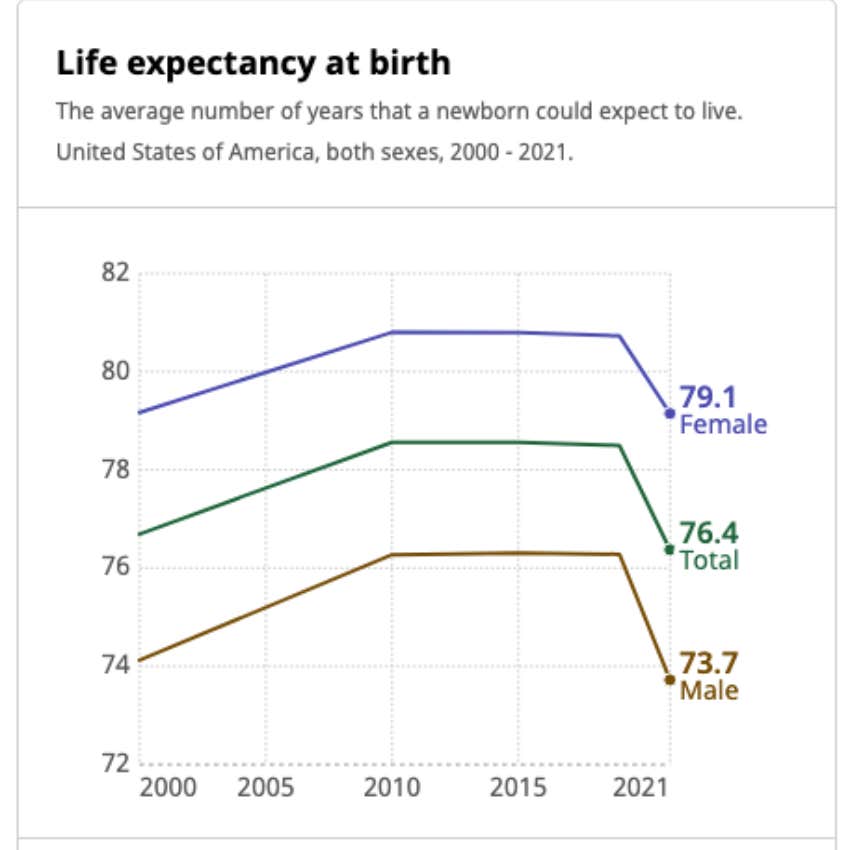
Recent data from the World Health Organization, however, strongly tilts the argument towards retiring earlier rather than later. The numbers are telling a story that many financial planners aren't talking about. Once you see the trend, it's hard to un-see it. Why? Take a look at the chart below — straight from the WHO.
Retiring at 65 could be a huge mistake, and it comes down to one crucial number: healthy life expectancy
 World Health Organization
 World Health Organization
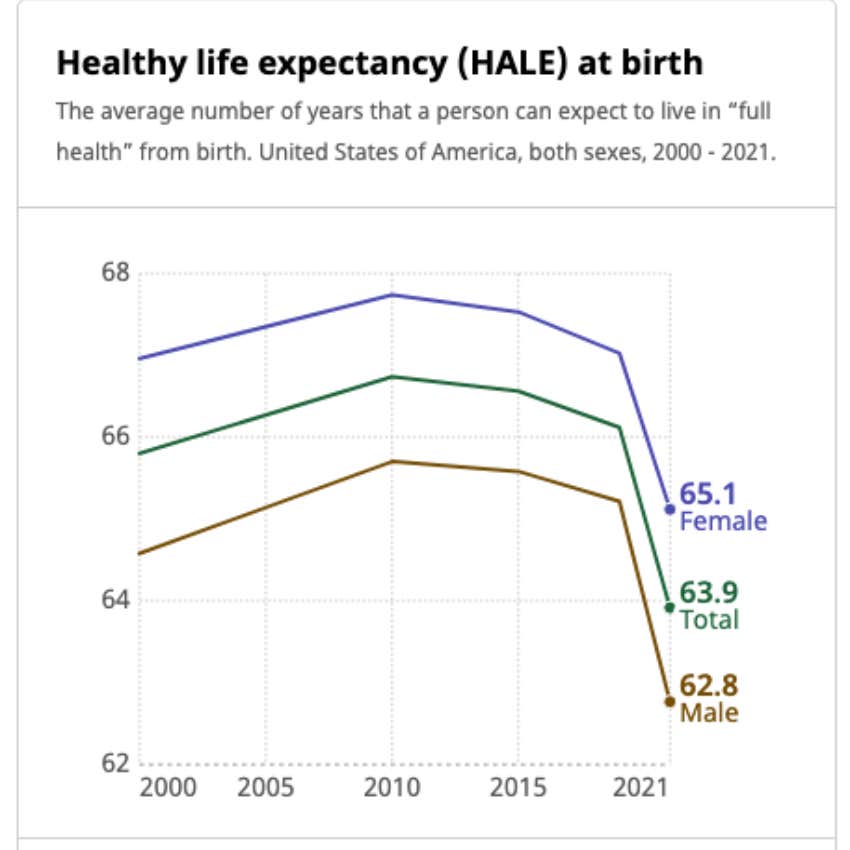
No, I’m not even referring to the downward trend in life expectancy, which itself is very concerning. I’m referring to the downward trend in healthy life expectancy. Look at the gap.
What's the difference between life expectancy and healthy life expectancy?
This is taken directly from WHO:
“Life expectancy refers to the number of years a person can expect to live. It is an important way of assessing the health of a population and is used to inform health policy and initiatives that impact everyday life.
“Life expectancy at birth is the average number of years that a newborn could expect to live, (the average age of death) while “Healthy life expectancy (HALE) at birth” is the average number of years that a person could expect to live in “full health” from birth (Author’s emphasis). This measurement takes into account years lived in less than full health due to disease and/or injury. — World Health Organisation
In short, healthy life expectancy is the total number of years you can expect to live “healthy”. The average American male has a healthy life expectancy of 62.8 years. The average American female has a healthy life expectancy of 65.1 years. Yeah, you read that right.
If you plan to retire at 65, statistics suggest you’re likely to retire already sick and die 12 years later
 Diego Montalvan / Pexels
Women biologically tend to live longer than men. The stats for women are equally grim, with the average woman retiring at 65, right into sickness, hardly the golden years. Research found that although a correlation between early retirement and mortality risk was not found, on-time retirement was associated with a higher mortality risk.
This association was a contradiction of the healthy work effect, which reflected the consistent tendency of the actively employed to have a favorable mortality experience.
How to ensure you stand the best possible chance of actually enjoying your retirement years
Researchers who studied the effects of retirement found that many people lost the goals and structure that their jobs provided them when they stopped working, so it's wise to ensure you've thought through how you'll fill your day and what will replace work (hobbies, social clubs, volunteering, doing absolutely nothing, etc.) after you retire.
There are a few things you can do for a better shot at healthy retirement years: Cut down on processed foods (as much as you can), exercise more, and maintain a healthy weight. It's a simple fix.
Overall, the researchers concluded that retirement, early, on time, or late, is something to be celebrated rather than feared. The main takeaway is that the default retirement age was set in an era where "healthy life expectancy" wasn't exactly a metric anyone tracked.
Now that we have the data, we should be asking not whether you can afford to stop working, but whether you can afford to start living. The answer might be different for everyone, but it'll most likely be a lot earlier than 65.
Daniel Lin is a CFO with over 15 years of financial management experience. In his free time, he writes extensively on Medium and contributes to topics such as personal finance and retirement. Daniel is also an advocate for diabetes prevention.

