
People Raised Without Smartphones Learned 6 Life Skills Most Young Adults Will Likely Never Know
 Everett Collection | Shutterstock
For younger generations, it's hard to imagine how kids in the 1900s were able to do anything without smartphones. And yet for anyone who grew up without the tech, the fact that kids today can't read a map or write in cursive is heartbreaking.
We're all basically carrying supercomputers around in our pockets, and it's made us a little lazy. And while the life skills kids had to learn before everyone had phones are nearly obsolete, it wouldn't be terrible for kids to learn them. In fact, some of them might even be downright beneficial to their development and critical thinking skills.
Young adults will probably never learn these basic life skills people who grew up before smartphones learned early:
1. The importance of good penmanship and how to write and read cursive
 PeopleImages | Shutterstock
Typing has been around since the invention of the commercial typewriter in 1866. However, it didn't render handwriting useless until things started to change and personal computers were in every home in the late '90s. But even then, writing was an important skill to have because you didn't carry your computer around everywhere you went.
Now handwriting is a lost art. It used to be criminal if your teacher couldn't read your chicken-scratch back then, and punishable if you couldn't get your cursive alphabet down. Now, classrooms have gone digital, and texting has replaced most correspondence. By the beginning of the 2021-2022 school year, 96% of public schools reported having provided students with digital devices.
The problem with this switch is that writing is important for brain development, especially in younger kids. It's also pretty important that they know how to read cursive even if they never write it.
2. Reading for fun
Back in the '80s and '90s, if your favorite cartoon wasn't on, you had to find other ways to scratch your imaginative itch. When you weren't biking outside or hanging out with friends, you were reading a book. And here's the kicker that most teenagers these days would gawk at: reading was enjoyable.
Now, with the distraction and unlimited enjoyment that come with the smartphone, reading is done only when scrolling through social media and a caption exceeds 20 words, or when assigned in school. Instead of getting excited by the prospect of entering a new world that completely diverges from our own, young adults drag their feet at the idea of having to read anything long-form.
Looking back at 1982, around 60% of adults reported having read at least one book throughout the year. Now, in 2026, that number has dropped to 49%. This number only increases when audiobooks are included, but it still sits at 53%.
This percentage would be a lot higher if scrolling weren't an option. In 2023, a Gallup report found that the average U.S. teen spent 4.8 hours a day scrolling through social media, time that could have been spent expanding their minds with a good ol' novel.
3. Doing math in your head
Of all the starter apps on a smartphone, the calculator is probably one of the most used. It's completely taken the place of mental math for everything from tip calculations to making change.
Before smartphones, it was important to pay attention in algebra or finance class, because you'd probably need to refer back to that knowledge in the future.
While we've started to use our smartphones as a crutch, experts have recognized how dire the state of math education has become. Now, schools are cracking down on math classes and pushing math-focused programs to reintroduce the importance of arithmetic. States such as Georgia and New Mexico have passed bills mandating one hour of in-school math learning per day for grades K-5.
4. Reading maps and having a basic sense of direction
 Krakenimages.com | Shutterstock
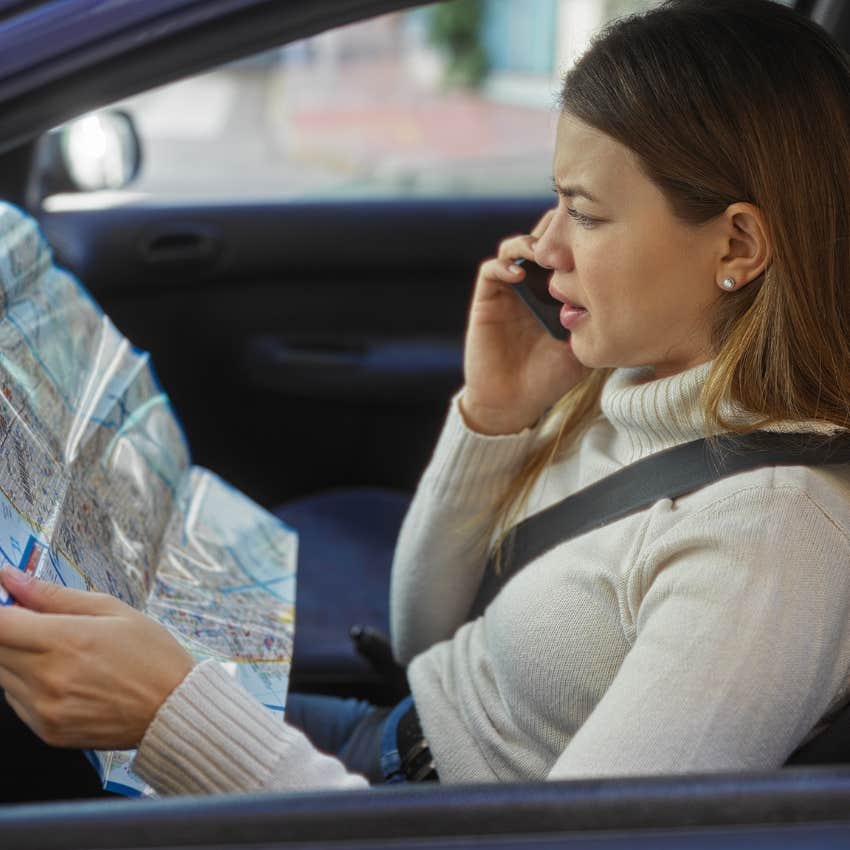
Most young adults these days couldn't point to North or understand the basics of reading a map. That's because GPS has made a sense of direction obsolete.
This is great when you have a fully-charged phone, but not so helpful when you're in the middle of nowhere and it dies. If this were to happen to most modern young adults, they'd be stranded. According to a recent poll conducted by Ordnance Survey, 41% of adults in the United Kingdom alone are unable to read a map.
Regardless of your data plan, knowing how to get around when you can't rely on a phone is a good skill to have. If you have a basic understanding of directions, you really can't ever be lost.
5. Using boredom to spark creativity
In the year 2026, boredom is considered a bad thing. But that's only because you've forgotten what it's like to generate your own sense of fun, sans-technology. We are so rarely bored nowadays with our phones constantly in reach.
When you aren't able to figure out what to do, and all of your friends are busy, you go on your phone to play games, scroll through social media, and watch YouTube videos. A 2024 study reported that the average American adult spends 5 hours and 16 minutes on their phone daily. From this study, 53% of Americans said that they wanted to cut down on their phone usage, but have developed a phone addiction.
Before smartphones, you had to get creative. Either you resorted to one of your many random hobbies, or found something new and enjoyable. Obscure, 80s-esque hobbies like stargazing, building model cars and dollhouses, photography, and hunting for collectibles have come close to extinction due to the smartphone.
6. Learning about new music from the radio
 F8 studio | Shutterstock
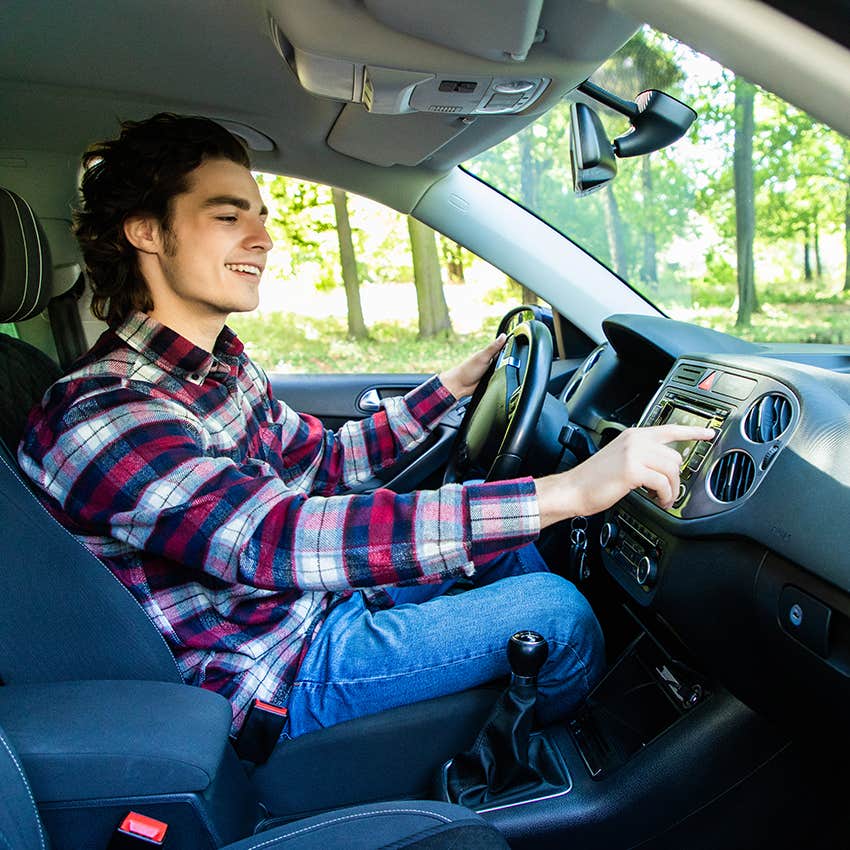
If you suggest that your teenager listen to the radio nowadays, they'll look at you with disgust and connect to the car via Bluetooth. Your old CD player likely sits in the back of the closet, collecting dust, and let's not even mention your Walkman. But there was a time when you had your favorite radio stations memorized, along with the catchy tune that played after ad breaks.
Smartphones have made music streaming platforms blow up. Since you can now take your phone everywhere, unrestricted by any cord, it seems to make perfect sense to also carry around your favorite playlist with you, accessible at any point in time.
Currently, Spotify has 751 million monthly listeners, 290 million of whom have a premium subscription. The problem is you don't just hear new music or get exposed to different genres anymore the way you did with the radio. Sure, ads were the worst, but new artists and songs were the payoff. Besides, the person riding shotgun got to play DJ, and that was an adventure in and of itself.
Gabrielle Mattes is a writer working towards a Creative Writing degree. Her focus is lifestyle, wellness, human interest, and relationships.

