
People Who Like Spending Time Alone Usually Have 6 Cozy Hobbies That Make Them Truly Happy
 Dekazigzag | Shutterstock
Whether you’re a self-proclaimed introvert or newly learning to love your own company, chances are you’ve been yearning for something to fill your time. After all, you can only doom-scroll and re-watch Gilmore Girls or The Office so many times.
Self-proclaimed introvert Devon Noehring has a solution. She shared six hobbies that are both quick and easy to learn, and also fun to partake in when you're alone.
"These are a few of my favorite little activities to do," she said, "and they're the perfect way to romanticize any day or night alone." As an added bonus, a few of these hobbies have been shown to reduce stress, improve your brain health and help you stay sharp as you age.
People who like spending time alone often have these six cozy hobbies:
1. Embroidery
 Kolombo Castro | Shutterstock
While it might seem daunting to pick up a new hobby, commit to learning it, and purchase the necessary materials, sometimes it’s worth the hassle.
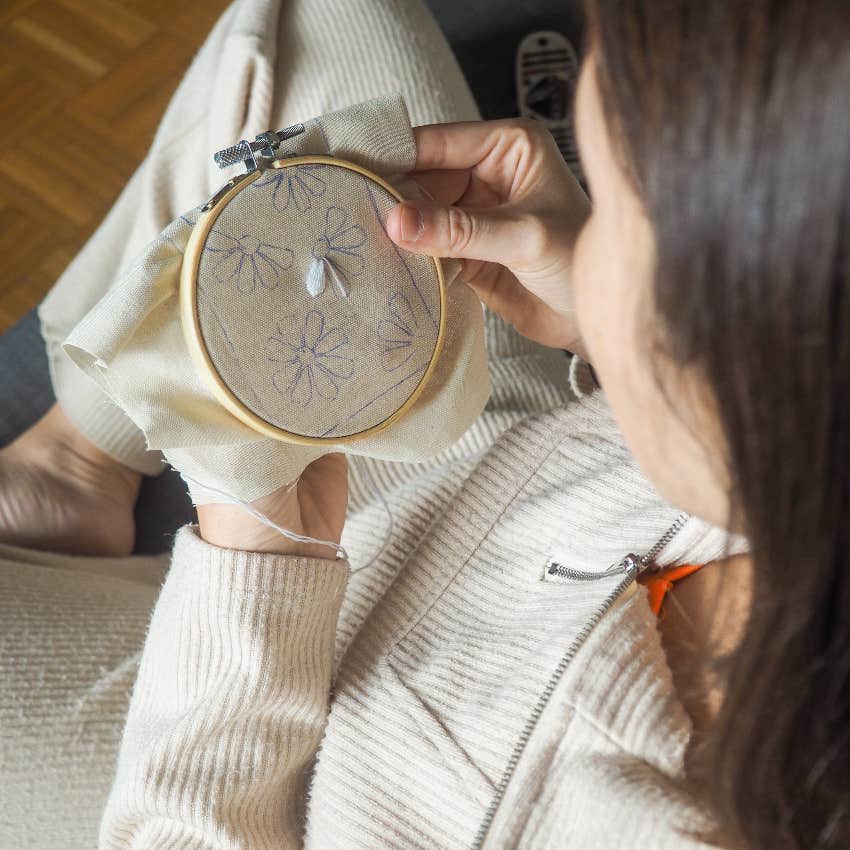
Not only has having a hobby been proven to help both mental and physical health, but it’s also an incredible means of stress relief at the end of a difficult day. Just having access to one hobby at home can remind you to center yourself, and embroidery is perfect for that.
As Noehring mentioned in her video, getting into the hobby requires some learning, but once you open the door, there are a million different ways to enjoy embroidery. From reworking old clothing to making art for your friends and family, the opportunities are endless.
If you want to test out the hobby, Noehring advised picking up an embroidery kit that provides all the floss, needles, threads, and instructions that you need to get started.
2. Diamond art
“Diamond art is another popular and fun way to stay busy,” she added. “I got diamond art coasters. They’re basically paint-by-numbers, but with little diamonds, so you place the diamonds where it tells you to put them.”
While it might be tedious, and sometimes unimaginably annoying, especially finding crystals everywhere for months, it’s a great way to relax that doesn't require much thinking. What it does require is focus on an almost meditative level, giving your mind a chance to be quiet. You don't have to be creative, just present. '
Soon enough, you zone out in the best way.
3. Scrapbooking or creative journaling
 PeopleImages | Shutterstock
We’ve probably all committed to journaling at some point in our lives and we've also all quit journaling at one point, too. With all the pressure to journal for your mental health or to manifest some specific outcome, it can feel like a chore.
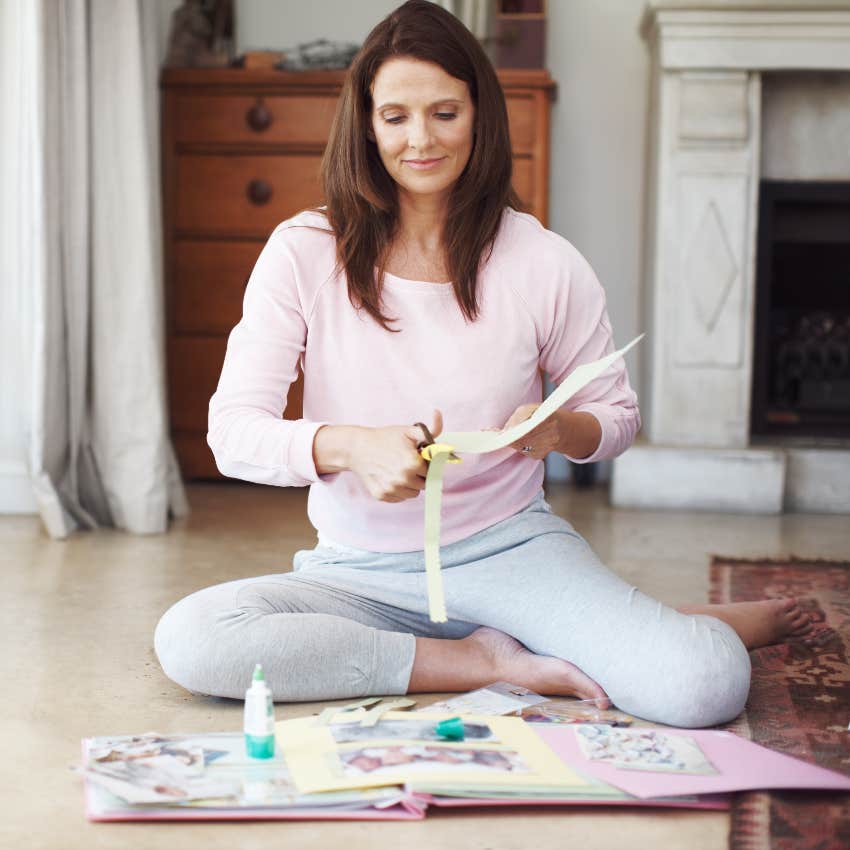
But there are ways to journal that are a combination of scrapbooking (images, memories, photographs) and journaling (intentions, feelings, goals, gratitude items). This can be both creative and inspiring while helping you rewire (so to speak) your brain in very positive ways.
While this creator suggests scrapbooking as a means for self-centering, recording your life, and getting creative, there are other hodgepodge ways to commit. Bullet journaling, mood boards, or even using an online app can be a great way to integrate the habit and transform it into a fun hobby you look forward to each day.
“We have just lost the art of tangible photos and memories, and it’s so satisfying to have a scrapbook or even a photo album to look through and remember,” Noehring admitted.
We’re looking for in a hobby is a way to unwind, but having a tangible result is sometimes the motivation we need to get started.
4. Puzzles
 Pixel-Shot | Shutterstock
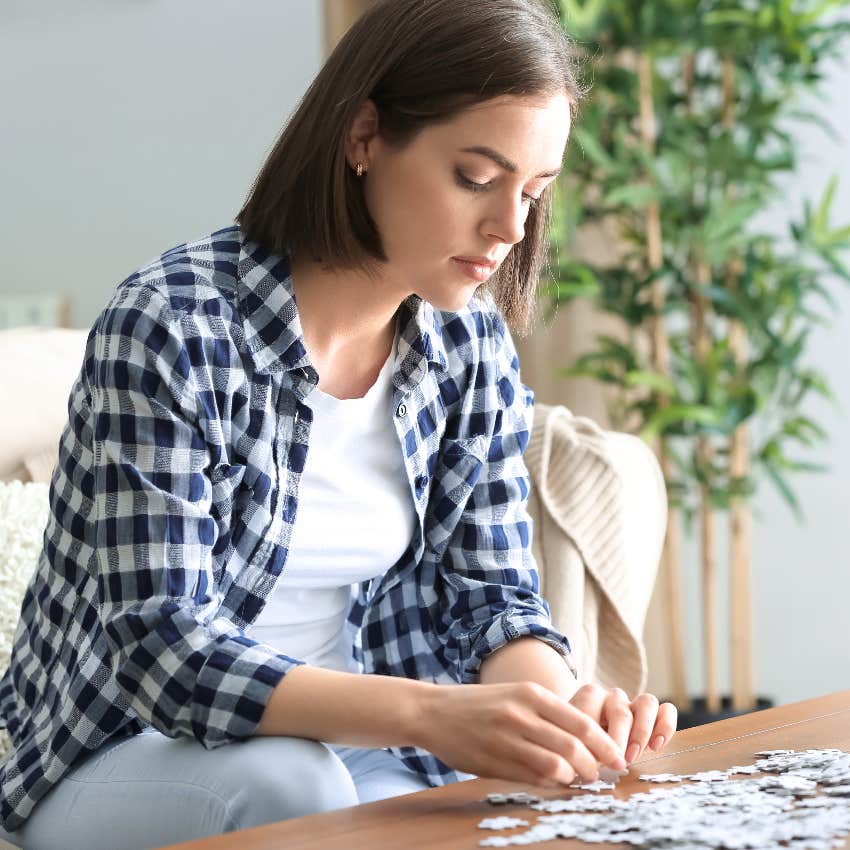
Puzzles have been proven to not only regulate your mood, nervous system, memory, and concentration, they’re also just plain fun. Whether you’re a fast-paced, professional puzzle person, or a slower, more casual puzzler, they’re an easy, cheap, and fun way to wind down.
With options at most thrift stores, online retailers, and mom-and-pop corner stores, there are tons of ways to adopt the hobby. Similar to puzzles, Lego sets and other “build-centric” activities can be perfect hobbies for people spending time alone at home. This is especially true if you're aging, as puzzles can help protect cognitive function.
5. Coloring books, paint-by-numbers, or sticker pages.
“I feel like coloring is having a rebrand these days,” Noehring said. No longer are coloring books just for little kids, they're also sold pretty much everywhere in varying levels of complexity.
If you have access to a printer, you can find coloring pages that are free. There are also lots of free places to print, including local libraries.
Along with improving mental health and memory, coloring is also shown to help improve sleep quality and physical fatigue. Of course, hobbies should be fun, but it doesn’t hurt when they're also improving other areas of your life.
6. Committed reading
 Regina Foster | Shutterstock
If you’re not already an avid reader, committing to reading may seem daunting. So start with an easy read, like a short book in a genre that you've always found to be enticing or exciting. Lots of people like mysterys, spy novels and romance, but there are plenty of places to get started.
If you haven't been reading much lately, you may need a little head start to get your eye muscles (and your brain!) back into the swing of things. Fans of Noehring suggest using an audiobook in tandem with a physical copy, when available, for practice getting into the rhythm of reading. Following along in a book is a great way to warm up your eyes, which makes reading easier.
And once reading becomes easy, the world is literally at your fingertips. You can be anywhere, learn anything and stay cozy at home on the couch at the same time. Plus, they're great to have around for when you don't have cell service or your battery koncks out on the train.
Zayda Slabbekoorn is a News & Entertainment Writer at YourTango who focuses on health & wellness, social policy, and human interest stories.

