
Smelling One Thing Can Help Calm Your Anxiety Fast, Study Finds
 Peopleimages.com - YuriArcurs | Canva
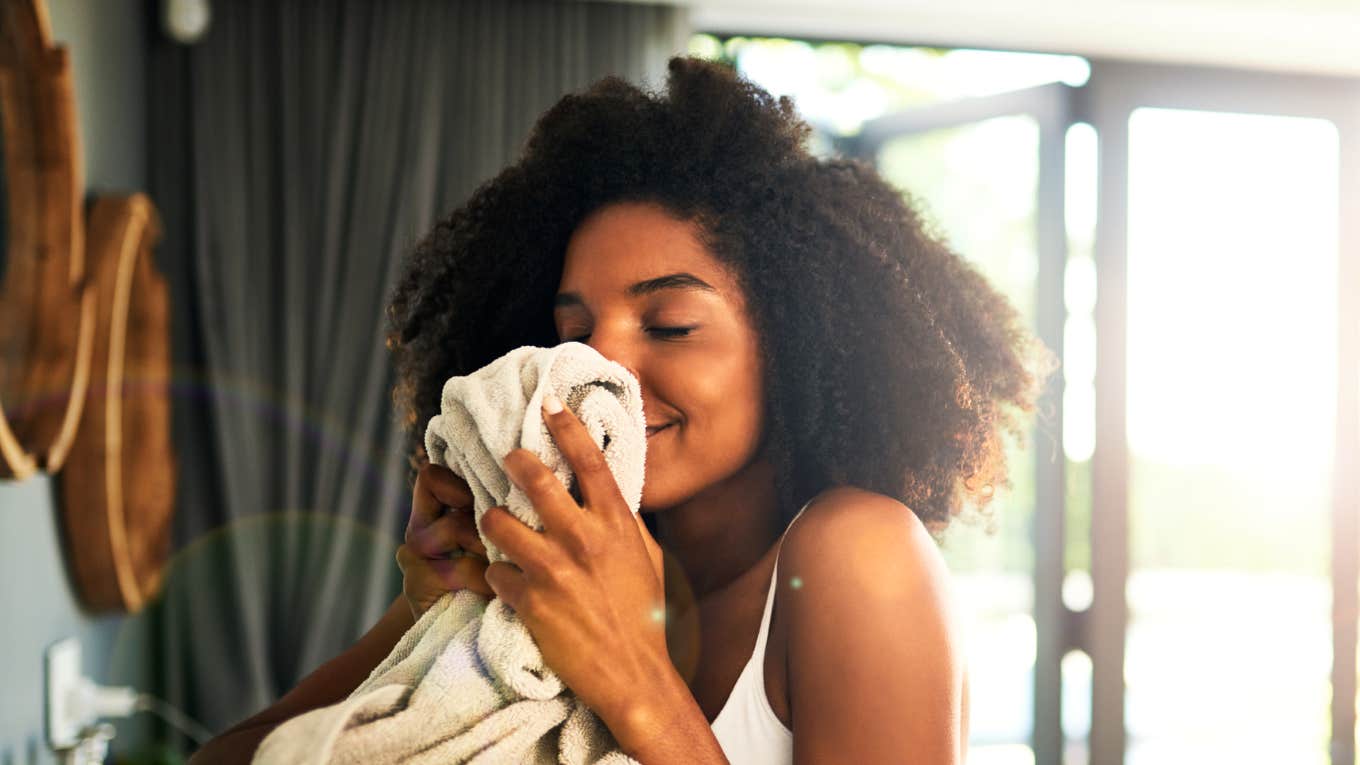
Once, I shared with a counselor that I sprayed my boyfriend's cologne on a teddy bear to help me sleep. I viewed it as a sign of weakness, but my counselor saw it as an opportunity. She surmised that my boyfriend's scent served as a calming factor in my life.
Moreover, she suggested using scent anytime I panicked or struggled with emotions. So, I carried a hanky that smelled like Old Spice, and much to my surprise, it helped alleviate my anxiety. And there's a scientific reason for that:
Smelling a nostalgic scent can calm your anxiety fast, says a study
 BearFotos | Shutterstock
Somewhere along the line, I forgot about the power of scent until I experienced a panic attack years later. As my partner enveloped me in his arms, the smell of his cologne hit me and eased my racing heart. The knots in my stomach untwisted as the scent brought me back in time to falling asleep on my dad's chest.
Researchers call this the Proustian memory effect
In essence, it means that childhood memories linked to scent stay with people throughout life.
Neuroscientist and world-leading expert on the psychological science of smell, Rachel Herz, said that "Odors are especially effective cues for emotional memories because they have a direct route to the brain's emotional centers. That's why a smell linked to a positive past experience can instantly change how you feel in the present."
Then, a 2015 study aimed to determine the effect of Proustian memories on consumer preferences. They concluded that "personal potency of Proustian memories evoked by a product's fragrance, more than the hedonic qualities of the scent per se, drives product perception."
So, when someone has a memory of a certain scent, this will be the strongest driving factor in their reaction to it. The fragrance industry is already attempting to relate to your emotions through your olfactory nerve. Think of those pumpkin spice or cinnamon candles that evoke memories of Christmas, or cotton-fresh fragrances that evoke feelings of relaxation.
Our sense of smell works by sending impulses from receptors in the nose. Then, sending them along the olfactory nerve to the olfactory bulb in the brain to be processed. The bulb then passes information about the smell directly to the amygdala and hippocampus, which form part of the limbic system.
Our limbic system is instrumental in controlling mood, memory, behavior, and emotions. What's especially noteworthy is that the amygdala is responsible for forming the memory of emotional responses such as fear, anxiety, and aggression.
Our sense of smell is the only sense that has a direct connection to this part of the brain
 PeopleImages | Shutterstock
You might have seen the image that advises a person experiencing anxiety to notice or touch five things in their surroundings in an attempt to ground themselves. But perhaps we should be advising people to find or come prepared with a soothing scent.
On a primal level, our brain essentially cross-analyzes smells to distinguish between pleasant/foul, safe/unsafe, and familiar/strange. The smell of chlorine may evoke memories of playing in the pool. Or it could make your throat constrict as it triggers the memory and the fear you felt when you almost drowned as a child.
Another example comes with children. For instance, the baby's smell increases oxytocin (the love hormone) in the mother, triggering the milk-ejection reflex and facilitating bonding by lighting up the brain's reward centers.
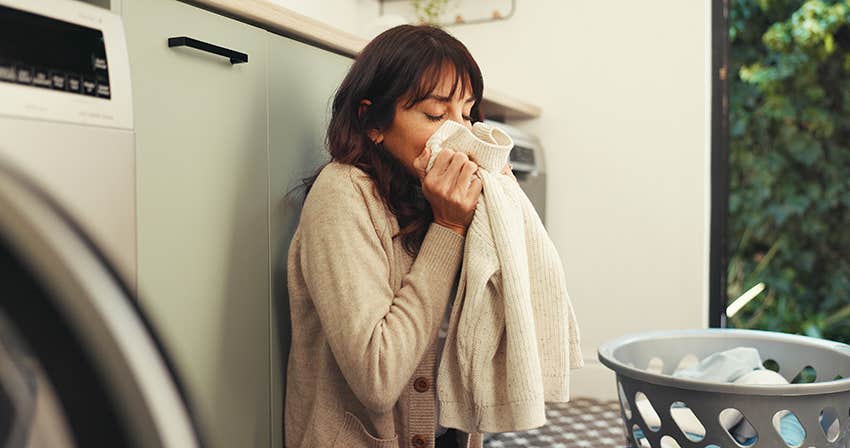
Hence, if you can find a scent with calming associations, you can use it to your advantage
Ancient healers have long used scents such as jasmine, citrus, and lavender to induce inner peace.
Unfortunately, though, research on the efficacy of aromatherapy is limited. However, a Japanese study used scared mice to later expose them to different scents and observe the effects. When linalool (the compound that gives lavender its fragrance) was pumped into the cage, they found it had an effect similar to that of many anti-anxiety medications.
Often, scent associations are affected by culture and personal experience. American babies may associate powdery vanilla aromas. French parents, however, often associate their babies with the smell of orange blossoms.
In the same vein, the smell of campfire smoke might soothe one person while it terrifies another. As with any treatment, we just have to find what works best for us. Which smells evoke calm, happy memories and emotions for you?
Nadia Nic Giolla Chomhaill is a writer who focuses on mental health, self-care, and health and wellness.

