
Gen Z Son Gave His Gen X Mom An Ultimatum: Go To Therapy Or We Go No Contact
 Marian Fil | Shutterstock
It seems as though everywhere you turn these days, there's a new story about millennial and Gen Z adults having no contact with their parents due to their unwillingness to work through the issues of the past.
They fight and fight, and eventually go their separate ways, even if it hurts. However, one mom shared that she took her son's ultimatum to heart. Though it wasn't easy, it ended up changing everything for them.
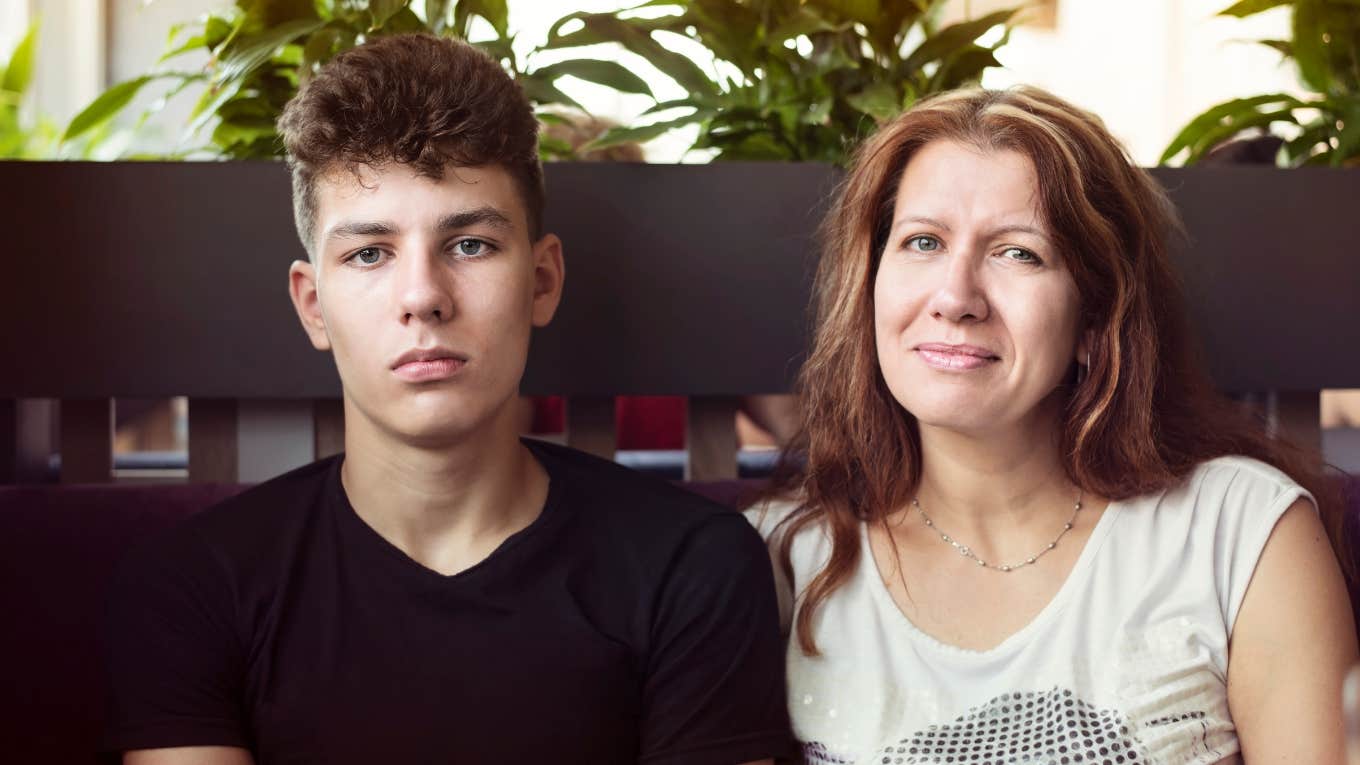
A Gen X mom shared what she learned from her Gen Z son's ultimatum: Go to therapy, or we go no contact.
Many therapists and mental health experts believe that parent-child estrangements have reached an all-time high in recent years, and the trend appears to be growing. Some recent studies have placed the number of adult children estranged from their parents as high as 25%.
At the crux of the issue is certain therapy-informed shifts that leave adult children and their parents with very different ideas about boundaries and what is and is not appropriate family dynamics. And sometimes, obstinacy on the part of older parents makes reconciliation difficult if not impossible.
Fabulous Fifties was one of those parents. As her handle suggests, she's a Gen X mom in her 50s with a Gen Z son who recently gave her an ultimatum: Go to therapy, or they would no longer be speaking.
The Gen X mom said in her video that, at first, she found her son's no-contact ultimatum 'abusive' and offensive. When a commenter on one of her previous videos said they felt like ultimatums of this nature were abusive and disrespectful, the mom immediately acknowledged the sentiment. "I so get this. Because when I started this journey, I thought that same thing," she said, adding that even when she relented and agreed to go, she expected some kind of reward from her son for doing so.
That all changed when she actually began therapy and started learning about her own trauma.
 PeopleImages | Shutterstock
The mom said she began therapy wanting to talk exclusively about her son. But as it happens in therapy, her therapist wanted to talk about her instead. "I said, no, you don't understand. I need to fix this relationship with me and my son … And she goes, 'I get it. We're going to fix you.'"
The mom backed down and let the therapist lead the way, and it wasn't long before everything in not just her relationship with her son but also her own life began to fall into place. "We started digging into my trauma, and I went, oh, wait a minute, my mom was traumatized. And then she handed it down to me, and then I handed it down to my kids. And now the relationship between me and my kids is like this. Why is that?"
She stressed that this is the source of the disconnect between younger and older generations that is fueling estrangement. "[Our kids] have access to mental health information that I didn't have access to," she said. "They know what toxic is. They understand what trauma is. And even if they haven't worked their way out of that trauma yet, they know what a toxic mom is."
The mom said that learning about how trauma works healed her relationships 'naturally.'
"I start healing myself. I start healing my own trauma. And as I do that, my relationship with my kids does this naturally," she said, making a gesture of her hands coming together to illustrate.
 VH-studio | Shutterstock
It also taught her that labeling her children's confrontations as "abuse" was a fundamental misunderstanding of the situation. "My kids have trauma — it's not abuse. They weren't abusing me. They were coming from a place of pain."
And she now understands where that pain came from. "The choices that I made in raising them, in not recognizing their emotional needs as much as I could have, I caused my children trauma."
Her new understanding has allowed her to break the cycle of generational trauma, and it's begun to heal her relationship with her own parents.
The mom recounted a conversation she recently had with her son about the strict, rule-based, authoritarian parenting style she used on him. It made her realize that the way parenting has changed in recent years, with the advent of new approaches like "gentle parenting," has everything to do with what she's learned about trauma.
"Yes, we all need to learn to follow the rules," she said, "but if we're teaching our kids to follow the rules at the expense of their emotional safety, emotional intelligence, [and not] teaching them emotional regulation, they're going to have trauma."
Being willing to listen and work on these things led to her healing, and that healing changed everything. "It all stopped. I broke the intergenerational trauma," she said, "and in the meantime, I'm healing my relationship with my parents."
What the mom may not realize is that she's using her story to heal strangers, too.
At the risk of sounding overwrought, as a person whose mother severed ties rather than discuss issues like these years ago, Fabulous Fifties' story has given me a sense of hope. Not for my relationship with my own mother, that ship has sailed, but rather hope that other parent-child relationships can still be salvaged.
 Bricolage | Shutterstock
Confronting your traumas and mistakes can be terrifying work (as someone who's been in therapy for 10 years, I know all too well). But this woman's experience shows what can happen when you steel yourself and do it anyway. Here's hoping her story encourages more parents to dig into that process. Because as hard as it is, it's absolutely worth it.
John Sundholm is a writer, editor, and video personality with 20 years of experience in media and entertainment. He covers culture, mental health, and human interest topics.

