
People Who Feel Actual Grief When They Finish A Good Book Usually Have 9 Seriously Rare Traits
 Srdjan Randjelovic | Shutterstock
Some people get so consumed in the pages of a good book that they begin to love the characters as real people. They even go through the more complicated process of grieving the end of a story like they just lost a loved one.
This grief has come to be known as a “book hangover.” Professor Maja Djikic, PhD, explained that this feeling is totally valid because “the end of the book signals a loss of something valued.” What different readers value most about different books is bound to vary, but those who spend time grieving their favorites share unique characteristics other people just wouldn’t understand.
People who grieve the end of a book they loved usually have these rare traits:
1. They can easily relate to other people
 LeoPatrizi from Getty Images Signature via Canva
Someone who feels real pain over leaving a beloved book behind is probably the kind of person who has a strong sense of empathy and connects with other people with little effort. Of course, the people they feel connected to might only exist on the pages of a book and not in real life.
Literature professor Blakey Vermeule admitted to being “fascinated” by the way readers relate to literary characters, adding, “We use fictional characters to extend our minds out into the world and to break the world down to a manageable size.” Although characters in books aren’t real, they feel real to readers because they see pieces of themselves and of others in them. This makes them hard to let go of.
2. They have a vivid imagination
People aren’t often encouraged to use their imagination after they grow up, so reading gives them a chance to feel the nostalgia that comes from creating their own world. Not all readers take a deep dive into a story, but some can picture the setting and characters very clearly.
This also makes it more difficult for them to accept that a book really is over because it felt especially real. Research has shown that we learn from things we imagine in the same way we learn from things we actually live through, so these folks can take comfort in knowing all of the books they love help shape who they are.
3. They like feeling deep emotions
Not everyone feels comfortable with their emotions, especially when they’re strong, but those who grieve over the end of a book don’t have a problem with it. They’re used to feeling things deeply, and doing so doesn’t frighten them.
These folks are known as highly sensitive people. It’s easy for them to feel misunderstood since other people don’t experience emotions in the same way, which might explain why they often find comfort in fictional worlds.
4. They’re comfortable with their own thoughts
The world is becoming more and more obsessed with constant distractions, and it’s easy to access them when everyone is surrounded by technology. As unfortunate as it sounds, some people don’t like just sitting in silence with their own thoughts for company anymore when they’re used to being overstimulated.
The process of getting to know yourself better through your own thoughts and feelings is known as introspection. It might seem strange to apply this to a book written by someone else, but stories impact readers on a personal level and leave them with a lot to consider.
5. They prefer complexity over simplicity
 Vlada Karpovich from Pexels via Canva
According to communication professor Melanie Green, PhD, feeling like you’re lost in a book is a phenomenon called “transportation.” What makes someone feel this way is based on their personal preferences, though. People who go through a mourning period when they finish a book probably like complex stories better.
There are plenty of books that feel entertaining on the surface level, almost in the same way small talk does. Someone who feels such deep emotions over a book is going to naturally gravitate towards complicated plots and characters that make them feel like they’re being swept away.
6. They like feeling immersed in something
Some forms of media are so engaging that they make you feel like you’re part of the story. You become more attached to what you’re reading or watching, but not in an unhealthy way. This could be described as feeling immersed, or even finding escapism in entertainment.
This sounds like it could be a bad thing, but someone who’s immersed in a book hasn’t lost touch with reality. It’s like they’ve found an additional one that is just as impactful. Dan Conway, the CEO of the Publishers Association, said that “books are a great way for us all to escape from our everyday routines.” This helps readers find a brief respite from stress.
7. They’re passionate about the things they love
Reading a book is a full experience for some people in a way others might not understand. They enjoy the story, but they also look for other readers who feel the same way and collect songs and art that remind them of the characters along the way. When they love something, they feel truly enthusiastic about it.
The folks who really care about the things they’re interested in are sometimes accused of being “too much,” but there’s nothing wrong with them finding joy in something like a book. They also carry this passion into other areas of their lives, which can make them a lot of fun to be around.
8. They enjoy spending time in reflection
Everyone develops their own perspective and way of thinking throughout their lives, and some people are deeper and more analytical than others. This doesn’t mean they did something wrong or right. It just means they spend a lot of time reflecting on what they’ve experienced.
These are the kind of people who are always searching for greater knowledge and meaning. They naturally look for those things in the books they read, which may make them think about them more deeply than the average person, even if it means shedding a few tears at the last page.
9. They understand the power of endings
 mapodile from Getty Images Signature via Canva
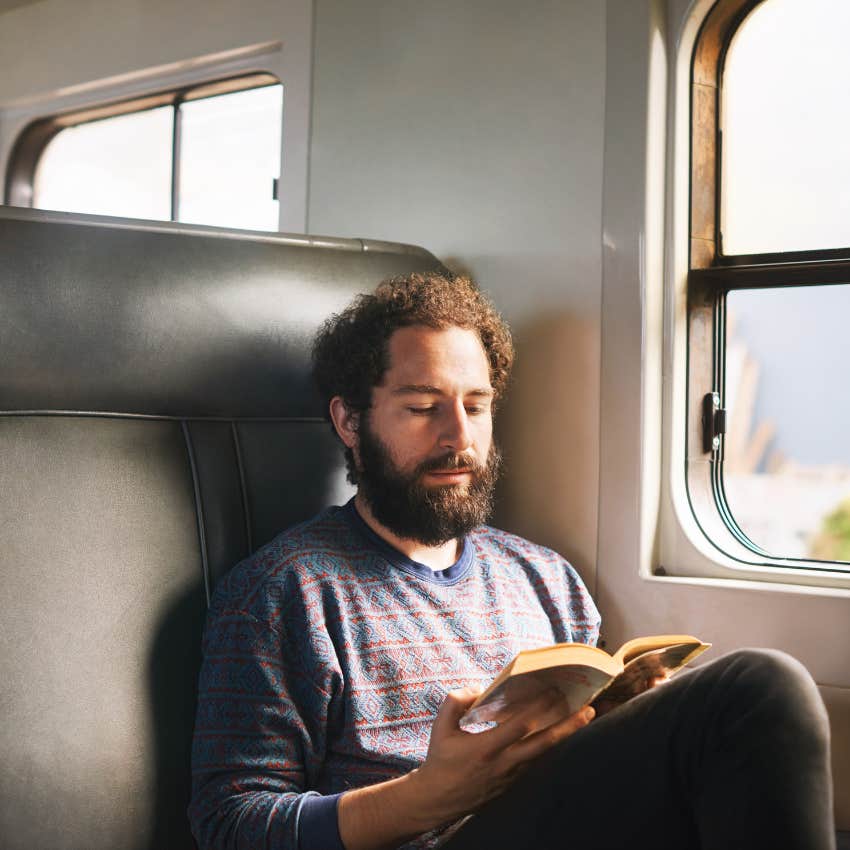
Every book has to end, but there are a lot of endings that we all go through as a part of life as well. In one study, researchers found that people who thought they were leaving a place they loved soon were more likely to “seize the moment and extract greater well-being from their lives.”
Finishing a book might not feel quite as final as some of life’s other endings, but the same principle still applies. A reader who doesn’t take endings for granted is going to make the most out of the last few chapters that they can because they know they’ll never have the exact same feeling again.
Mary-Faith Martinez is a writer with a bachelor’s degree in English and Journalism who covers news, psychology, lifestyle, and human interest topics.

