
You Can Usually Tell How Long Someone Will Live By How Much They Read, Says Study
 ALPA PROD | Shutterstock
Most people know that reading is one of the most beneficial hobbies you can have, but it seems like there might be even more advantages to it than we realize.
According to a study published in the journal Social Science and Medicine, the amount of time someone spends reading can provide some insight into how long their life will be. Researchers noticed a significant difference between the participants who read and those who didn’t.
The study proved that people who read books do tend to live longer, and there were some interesting additional findings.
Researchers tracked data from participants in the nationwide Health and Retirement Study over the course of 12 years. Obviously, they wanted to determine whether people who read live longer lives, but they also wanted to find out whether reading books rather than newspapers or magazines made a difference.
 Yan Krukau from Pexels via Canva
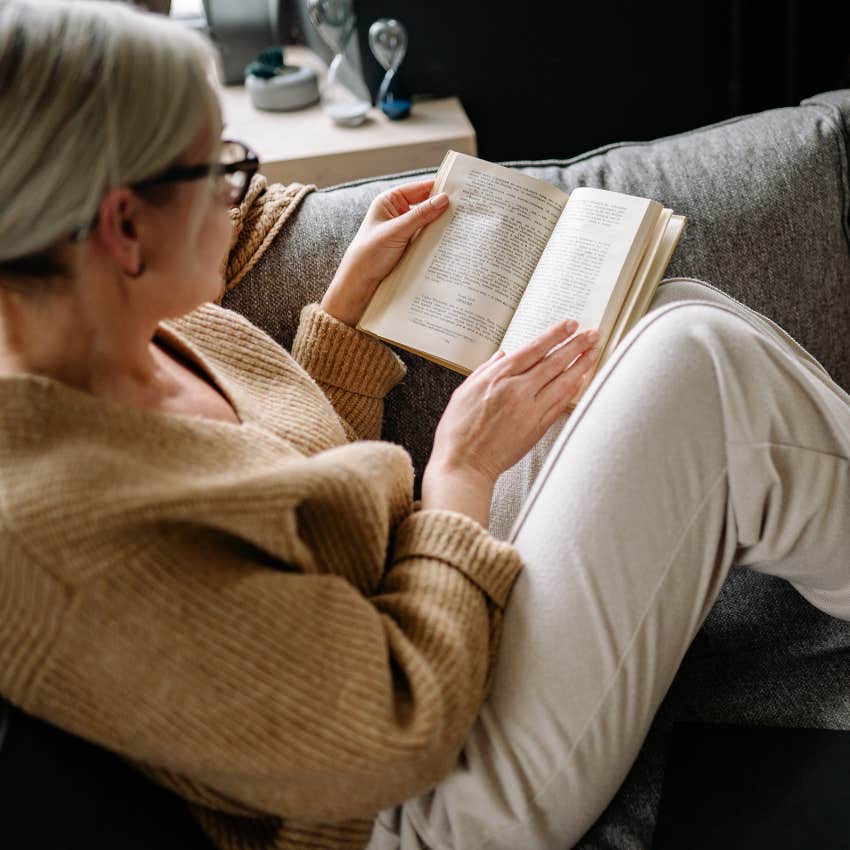
It’s not a huge surprise that the researchers concluded that people who read books lived about 23 months longer than those who didn’t, and that they had a 20% lower risk of passing away in the following 12 years as well.
The most interesting part of the study might be the advantage that actual book readers had over people who preferred other reading material. A lot of people would probably assume that all reading is created equal, but there’s something special about true bookworms.
Researchers aren’t completely sure why people who read books live longer than everyone else.
They thought it could come from the way that reading keeps you cognitively sharper. While there was no way for them to say definitively, previous studies have shown that reading can change someone’s brain structure over time and slow down age-related cognitive decline, so it’s a safe assumption.
 Robert Kneschke via Canva
Sitting down to enjoy a book can also decrease a person’s stress levels and make them more empathetic. We usually think about those benefits as being more immediate, but less stress and better relationships could certainly contribute to longevity, too.
As for why books are better than newspapers and magazines, it could be related to the benefits of reading fiction. It’s a common misconception that there’s nothing useful about fiction, but it makes the brain work differently and increases people’s social skills, so it’s definitely a good thing. And, fiction is obviously found more frequently in actual books than in newspapers and magazines.
Unfortunately, there aren’t many people who get the full benefits of reading books.
In a 2025 survey, 75% of Americans said they had read at least one book in the last year. That’s pretty impressive, but fewer people actually read frequently. Only 38% said they read up to five books over that year, while 13% read between six and 10.
The authors of the original study didn’t mention how much time someone needs to spend reading to really reap the rewards they discovered. It would make sense that more reading means more advantages, though. You probably can’t expect to live longer just because you spent a few hours reading.
 FamVeld from Getty Images via Canva
This could easily explain the literacy crisis that experts are warning about. Students’ literacy skills are getting worse, and adults’ aren’t much better. Cognitive neuroscientist Maryanne Wolf said that this isn’t really about basic reading, though. People are still taking in a ton of words, but a lot of them come from social media and other content that makes it harder for them to understand the meaning of longer texts.
That makes the future seem pretty bleak, and it even calls into question whether lifespans will shorten because no one reads books anymore. It also makes it sound like newspapers and magazines are better than nothing at all.
The good news is that if you’re the one who always gets teased for carrying a book everywhere, you can rest assured that you’ll probably have a nice, long life.
Mary-Faith Martinez is a writer with a bachelor’s degree in English and Journalism who covers news, psychology, lifestyle, and human interest topics.

